Inbound marketing is a method of growing your business by building lasting relationships with consumers, prospects, and clients through “pulling” tactics such as SEO, content marketing, social media, video marketing, and more. These practices inherently build more trust than outbound “awareness style” marketing and, as a result, create 54% more leads.
What’s even more interesting is that consistent inbound marketing (over a period of about 5 months) can drop your overall lead cost by 80%. These stats are powerful, but they barely scratch the surface of why it’s important to understand inbound marketing and do it well.

To start, you need to understand that inbound marketing is generally divided into four stages: attract, convert, close, and delight.
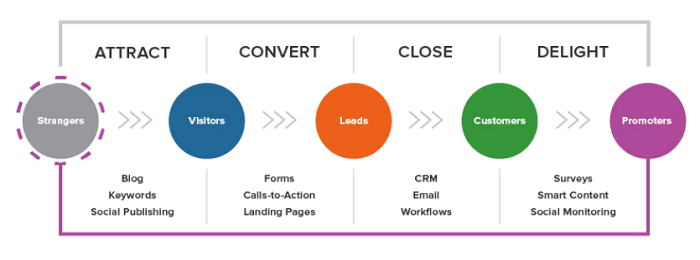
The four stages of this process are powerful because, when done right, they create “pull power.” Instead of advertising to the customer, as traditional outbound marketing does, inbound marketing focuses on creating reasons for the customer to come to you.
You can do this by publishing helpful content or personalizing your social media pages and website copy. Almost all marketers (93%) say incorporating some level of personalization improves lead quality or purchases. And, with the help of AI, it’s easier for brands to personalize the customer journey now more than ever.
Big brands like HubSpot, Airbnb, and Slack are experiencing success with these strategies. By creating educational content in-house or leveraging user-generated content (UGC) across socials, these big names have boosted bookings and conversions by building trust and showing their audience how relatable and authentic they truly are.
Let’s talk about what inbound marketing is, the most effective inbound marketing strategies, and how you can use these to grow your business or startup.
Key Takeaways
- Inbound marketing wins by “pulling,” not pushing. You attract people with SEO + helpful content, then convert them with clear CTAs, forms, and email nurture—value first, sale second.
- Tie inbound goals to revenue outcomes, not traffic. Track things like qualified leads, demo requests, and repeat purchases so you’re building a pipeline, not just pageviews.
- Match content to intent across the journey. Use TOFU to earn attention, MOFU to build trust, and BOFU to prove you’re the right choice, because one blog post won’t close the deal.
- AI is collapsing the funnel, so your content must “prove,” not just educate. Make buying questions easy to answer fast with comparisons, case studies, pricing info, and strong proof points.
- Measure what matters and iterate. Watch qualified leads, conversion rates by step, cost per lead, and assisted revenue over 30–90 day trends, then adjust content, offers, and distribution accordingly.
What Is Inbound Marketing?
Inbound marketing is a marketing strategy that attracts customers and clients to you. One of the most popular ways of attracting and retaining visits is through valuable content. Marketers who focus on providing high-quality content consistently may notice growth in repeat visits and user engagement.
For example, if I work in graphic design and want to attract people who need assistance in that field, I’d focus on creating content relevant to them. That could include design how-tos, YouTube videos about the best design practices, or a niche subject newsletter.
One of the best things about inbound marketing is that it can work across business sectors. These strategies are great for:
Established enterprises: Inbound scales across teams with consistent messaging and evergreen content.
Service businesses (agencies, consultants, local pros): Educational content, reviews, and case studies pull in leads who are already looking for help.
E-commerce brands: UGC or email flows can turn “window shoppers” into repeat buyers.
B2B companies: Educational content like thought leadership pieces and webinars, and nurture sequences, build trust across long buying cycles and multiple stakeholders.
SaaS and subscription brands: Product-led content (templates, playbooks, onboarding emails) attracts users and increases retention.
What Is the Purpose of Inbound Marketing? Why is it Important?
Inbound marketing reduces the need for you to go out and seek new users. When customers come to you organically, you no longer have to spend a lot of time and money chasing potential buyers.
This strategy can also increase customer trust. Almost three-quarters (72 percent) of customers conduct online research before deciding what to buy. If you present your company as an authoritative source in your industry, users may be more likely to pick you.
Inbound marketing is important because it builds trust before the sale. Instead of meeting prospects with a pitch, you meet them with answers via guides, tools, and examples that help them decide on their own terms.
It also scales better than relying solely on paid acquisition. Ads stop the moment you pause the budget. A strong content and SEO foundation keeps generating traffic and leads over time, which typically lowers your cost per acquisition as it compounds.
And it’s especially valuable for long buying cycles (common in B2B and higher-ticket services). You can educate stakeholders over weeks or months with email sequences, webinars, and case studies, so you’re the obvious choice when they’re ready.
The key is tailoring everything to your target audience. When your content matches real questions and intent, inbound works whether you’re a startup or an enterprise team.
Practical Inbound Marketing Examples
Let’s come back to our brand examples from earlier. Here are how three big brand names used inbound marketing to improve their already-stellar results:
HubSpot
They didn’t just talk about inbound — they built an engine around it. HubSpot pumped out helpful guides, templates, and blog content that pulled in a massive audience, then funneled that traffic into leads through smart offers and forms. The result: more people engaging with lead capture pages and a big jump in conversions.

Source: https://www.hubspot.com/marketing-statistics
Airbnb
Airbnb lets customers handle much of the marketing for them. By spotlighting real guest and host stories, photos, and reviews, they made the brand feel trustworthy and “real.” That kind of user-generated content works like social proof on steroids, helping drive more bookings and repeat engagement.

Source: https://www.tiktok.com/@lucilleugc/video/7291577953496861958
Slack
Slack focused heavily on education to remove friction. Webinars, tutorials, and onboarding resources helped teams understand the value quickly, which sped up adoption. Once people “got it,” Slack’s product spread inside companies through internal champions and word of mouth.

Source: https://slack.com/help/categories/360000049063
Inbound Marketing Versus Outbound Marketing
Inbound and outbound marketing techniques differ in how they approach the customer. They also produce different results.
Outbound marketing requires proactively reaching out to potential customers to gauge their interest in your products. For example, you may launch social media sale campaigns, engage in door-to-door sales, or cold-call people.
Inbound marketing, on the other hand, focuses on bringing the customer to you. Like we discussed earlier, this can include creating content that resonates with your desired audience.
Once brand awareness and long-term trust are established, people may be more likely to buy from you.
Here is a handy table to remember the difference between the two:
| Inbound Marketing | Outbound Marketing |
| Focuses on high-quality content | Focuses on sales campaigns |
| Generates brand awareness for building long-term relationships | More focused on converting new users |
| May take less time | May take more time |
| Saves money spent on marketing costs | Requires money for sales campaigns |
As you can see in our table, outbound marketing is still relevant. Think of outbound as getting your audience’s attention, and of inbound as what helps make them long-term customers. Using the two together is the best way to drive ideal marketing results.
The Stages of Inbound Marketing
Understanding the stages of inbound marketing can help you improve your website copy and attract the right customers faster. The four stages are: attract, convert, delight, and engage.
Attract
The first stage of inbound marketing is Attract. This stage is all about finding and attracting your target audience. An example would be creating a how-to guide as a blog. You would implement an effective SEO strategy by using relevant keywords in that blog, and then strategically share it on social media to attract people to your brand.
Ultimately, ask yourself: How do you help people find your website? Do you add a lot of relevant keywords in your blog posts? Do you use targeted hashtags?
Answering these questions and adapting accordingly can help you rank higher in Google search and be more visible in your desired audience’s social media feed.
Convert
When we talk about marketing, we often think about converting users. After all, the end goal of marketing is to find new users and “convert” them.
How can you use inbound marketing to convert users?
- sign-up forms
- effective calls to action (CTAs)
- incentivizing signing up for your newsletter
For example, look at this section of Nike’s homepage. It reminds visitors of a challenge they’re hosting and gives them the options to start a run or a workout using buttons at the bottom.

This CTA may prompt a casual viewer to sign up and become a part of Nike’s community.
Close
In some cases, converting a user isn’t as straightforward as offering a sign-up form and hoping they join your community.
One of the many ways you can enter the closing stage is by using automation. For example, automated emails that remind users of their abandoned carts can prompt a busy customer to return to your site and complete their purchase.
It works, too. Forty-five percent of abandoned cart emails are opened, and 50 percent of the links within are clicked. Such findings show how the “close” stage of the inbound marketing strategy can be equally if not more important.
Delight
The last stage of the inbound marketing strategy is the delight phase, wherein you reward customers for buying from you.
It could include actions like sending a thank you message, personalized follow-up emails, offering discounts, and more.
Here’s an example of a thank you page from Codica:

Source: https://www.convertflow.com/call-to-action/codica-thank-you-page
Not only does this add a personal touch and some appreciation to Codica’s funnel, but it also includes an opportunity for further engagement. Pointing visitors to additional articles and case studies gives Codica’s audience the opportunity to deepen their relationship with the brand.
If you choose to include surveys and feedback forms at this stage, you can also receive helpful comments and gain insight into potential problems to fix early on.
Inbound Marketing Strategies to Drive Business Growth
Now that you know what is inbound marketing and how it works, let’s dive into the best strategies for inbound marketing for startups.
1. Define Your Goals and Target Audience.
The first and most critical part of creating compelling content is understanding what your target customers want to learn. You need in-depth knowledge of your market to react quickly.
From there, get specific about what you’re trying to achieve. Inbound goals should tie to business outcomes—not just “more traffic.” For example, are you trying to improve lead quality, generate more demo requests, or drive repeat purchases?
Once you’re clear on the goal, define exactly who you’re trying to reach and what they care about. What problems are they trying to solve? What questions do they ask before they buy? When you align your content to those answers, you attract the right people—and make it easier to turn that attention into revenue.
2. Survey Your Current Customers and Leads
The easiest way to get to know your target market is through a survey.
This doesn’t have to be complicated. If you already have an email list, you can send them a simple form through SurveyMonkey.
To make this work, you only need to ask one question: “What is your biggest struggle?”
Your goal is to understand the problems they’re facing so you can create compelling content that targets their deepest interests.
3. Map Content To The Buyer’s Journey
When it comes to content, one blog post won’t close the deal. You need to consider a buyer’s entire journey, from discovery to purchase, and reach them at multiple touchpoints until they’re ready. Here’s what that looks like in practice:
- Top-of-funnel (TOFU): attract attention with blogs, checklists, short videos, and beginner guides.
- Middle-of-funnel (MOFU): build trust with webinars, templates, comparison posts, and email nurturing.
- Bottom-of-funnel (BOFU): help people decide with case studies, demos, pricing pages, and customer proof.
And now AI is compressing the funnel. Search engines and AI answers can skip the “browse” stage and send someone straight to a shortlist. So your content can’t just educate—it has to prove. Make every stage easy to act on: clear next steps, strong proof, and pages that answer buying questions fast.
4. Choose the Right Channels for Your Audience
Choose channels the same way you choose content: based on how your audience actually behaves:
- B2B buyers often want depth. SEO content, LinkedIn, webinars, and email nurturing work well because decisions take time and involve multiple people.
- E-commerce shoppers tend to bounce between discovery and purchase. Lean into SEO, paid retargeting, creator/UGC, and lifecycle email/SMS to capture and re-capture demand.
- Service businesses win locally with search, reviews, Google Business Profile, and case studies that prove outcomes fast.
- Niche audiences often live in communities—Slack groups, Reddit, Discord, industry newsletters—where trust is built through participation.
The goal isn’t “be everywhere.” It’s about picking 2–3 channels you can execute consistently, then connecting them with clear next steps so attention turns into leads and revenue.
5. Create and Share Compelling Content
The quality of the content you create is the most important feature of your inbound marketing strategy.
If you create generic, self-serving articles and videos, you’ll never see success.
No matter how hard you promote this content or how you designed it to rank well in search engines, you’re going to struggle to find new clients and customers.
The best-in-class content marketers work tirelessly to adapt their content to the target audiences they want to attract — and where that audience is in the customer journey.
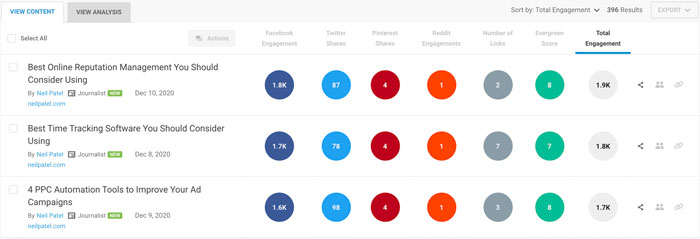
Understanding the customer journey and their needs is critical to making great content, but it’s not the only strategy you’ll need to draw in new customers and leads.
Optimizing your content headline is the most important strategy to do that. It’s what will drive the most clicks and draw in new traffic.
You should spend lots of time crafting a headline that appeals to your most targeted customers.
One of the best ways to do this is to include a bit of negativity, but you shouldn’t always have negative headlines.
But if you have a list of mistakes or talk about the worst strategies that could hurt your customer, this can be an effective way to drive traffic.
According to the Martal Group, companies with blogs generate 13x more leads per month than those who don’t.
If you’re going to produce this content, you need to make sure it works to its best ability.
For your content to appeal to your ideal readers, make sure there’s more to it than just large blocks of text. Humans love visual content.
Including lots of images, charts, and graphs is a technique I use to make my content more appealing, and I’m not alone.

Source: https://www.orbitmedia.com/blog/blogging-statistics/

Source: https://www.orbitmedia.com/blog/blogging-statistics/
The more visual your content, the more likely it is to improve your inbound marketing efforts.
Length is another focus area where you can improve your inbound marketing. Instead of writing short posts, you should be doing extensive research and producing in-depth content.

Source: https://www.orbitmedia.com/blog/blogging-statistics/
You should be writing articles that are a few thousand words long and supported by lots of data and analysis.
This is not only better for your SEO rankings, but it’s also more helpful for your customers.
The better your content, the more likely your readers are to share it with friends, recommend your site to others, and implement what you say.
Just because you base your content around data and analysis doesn’t mean it needs to be dry and academic.
You should work to produce the opposite type of content. You want to create articles that tell a story.
Using storytelling in your content (from sales pages to social media posts) is a way to create an emotional connection with your audience.
Storytelling has another powerful function. It creates brand recall.
Creating a personal, emotional narrative around your brand can boost brand recall up to 70%.
Why?
Because connecting with your audience on an emotional level literally rewires their brain. Compelling stories create new neural pathways linked to trust and personal connection, making you stand out far and above competitors in your target audience’s mind.
But, how do you implement this tactic in your startup? Look for opportunities to weave in stories when talking about your product or business.
Sure, your benefits and features are great, but the emotional connection you create with storytelling will close the sale and help grow your startup through inbound marketing.
6. Make a Habit Out of Guest Posting Consistently
When you look at the data, you’ll find that guest blogging is the best inbound marketing strategy.
This is because it provides you with backlinks, authority in the space, and relationships with key influencers.
But most people go about it the wrong way. If you aren’t using smart strategies to spread your startup’s message through guest posting, you might as well not do it.
If you want to reap the benefits of guest posting, you need to write consistently.
This is how the most successful startup owners have made guest blogging work well for them. Instead of a few posts, they wrote prolifically and gained ground quickly.
If you do a Google search for guest posts by Danny Iny, you’ll find dozens of pieces of content across the web.

This massive, consistent guest-posting strategy allowed him to grow his business Mirasee into the powerhouse it is today.
On his homepage, he displays an in-depth list of all the sites where he has been featured.

Dedicate some of your time to creating compelling content for other blogs to reach as many customers as possible.
Dedicate some of your time to creating compelling content for other blogs to reach as many customers as possible.
Another problem I see with entrepreneurs who want to use guest posting as an inbound marketing strategy is that they don’t look for sites that will give them much ROI.
The truth is that every guest post requires work, and that’s work that needs to give you a distinct benefit in visitors or leads.
If you post on a blog that has a dead audience, you won’t get any benefit, and you’ll have wasted your time. Look at the comments people are leaving on sites where it makes sense for you to guest post.
Not only will this give you content ideas, but it also tells you the readers are engaged, and a blog post here might result in readers clicking through to my startup’s website and purchasing from me.
6. Maximize Your Results from SEO with Keyword Optimization
You need to understand SEO to achieve any success with your startup in today’s search-driven marketplace.
The most important things to focus on are basic on-page SEO and backlinks for your site and your content.
How do you do that? Keyword optimization.
You want to find specific long-tail keywords which you’d like to use for targeting your content.
Why?
Long-tail keywords have a three to five percent higher click-through rate than generic searches.
The more specific someone is in their search, the more likely they know what they want and are close to converting into a customer.
7. Promote Your Content to Build Backlinks
Backlinks still matter for SEO—but not in the “collect as many as possible” way.
At the simplest level, backlinks are links from other sites to yours. Search engines treat them like votes of confidence, especially when those links come from relevant, trustworthy websites. A handful of high-quality links can beat hundreds of low-quality ones.
The best way to earn backlinks today is to create something worth citing, then promote it the right way. Think: original data, strong opinions backed by examples, free tools, templates, step-by-step guides, and “definitive” resources people reference in their own content.
Then focus your promotion on modern link-earning plays:
- Digital PR (pitch your data, angle, or story to journalists and editors)
- Outreach to relevant creators (not random “influencers”)
- Unlinked mention reclamation (turn brand mentions into links)
- Partner and community placements (where your audience already hangs out)
The number of backlinks you need depends on the competition, but quality, relevance, and intent alignment are what move the needle.
Not sure where to start? Use my free backlink checker to see who’s linking to your competitors, and what’s realistically earning links in your niche.
8. Acquire Inbound Marketing Leads with Free Content
When it’s time to convert your visitors into leads, you need bulletproof strategies to get people to give you their email addresses.
The best method I’ve seen is to offer free content in exchange for this contact information.
If your startup is in the B2B sector, or if you appeal to customers who want or need in-depth analysis before purchasing, you can make an effective lead magnet from a report.
This is a great way to get leads because the comprehensiveness of your work seems like a great deal for an email address.
HubSpot’s list of marketing statistics includes a pitch for their “State of Inbound Marketing” report. This is a detailed guide with massive amounts of high-quality data.

But they aren’t giving this away for free. To receive the report, you need to provide a detailed amount of information that HubSpot will use to follow up with you on their products.

This is an effective way to drive your visitors into your sales funnel and reach them even more effectively.
9. Host a Free Webinar
One of my favorite inbound marketing techniques for startups is free webinars that encourage customers to learn in real-time.
This is great because it lets them see your face and understand your personality. Besides, lots of people will download a guide and never read it.
But if someone signs up for a webinar, you can see if they watch the whole thing.
I have used this kind of training on my homepage in the past. I didn’t call it a webinar, though. I just used the term “training.”

This is a great way to increase your leads as visitors must enter their first name and email address to access the training.
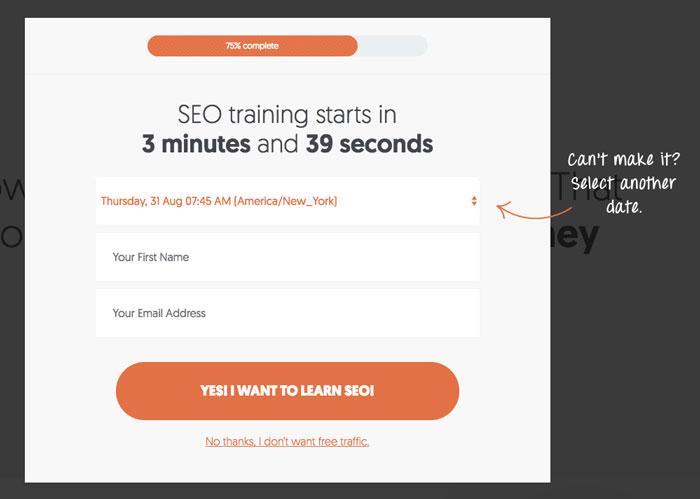
Since this is such a valuable teaching piece, people who come to my website are happy to provide their email address to learn SEO better.
10. Launch an Email Course
There’s another form of content you can create that will drive new customers.
Even better, it won’t require the extensive research that a report demands or the complicated backend software necessary for a webinar.
That strategy is to create an email course. This is a simple way to provide extra value without spending tons of time creating something with design elements or video.
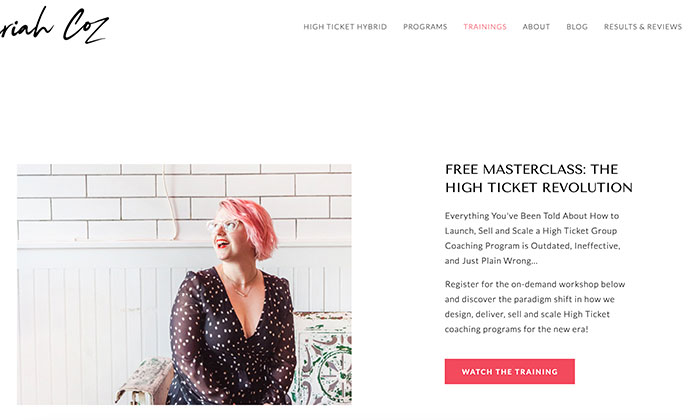
A great example is a free masterclass Mariah Coz offers. Because it’s a course, it makes the content feel more valuable.
If you’re currently giving away an e-book for your startup and you’ve found that it isn’t converting well, consider breaking down the content into sections.
Then use each section as a separate email. You may find that an email course or a masterclass converts even better than an ebook.
11. Start an Influencer Marketing Campaign
According to a survey by Influencer Marketing Hub, 75 percent of brands have a dedicated budget for influencer marketing, and 90 percent of respondents believe it’s an effective form of advertising.
If you do this the right way, it can be a free or paid method to get people excited about your brand.
If you’re going to launch an influencer marketing campaign, you need to understand what will make it work best.
First and most importantly, you need to make sure you’re appealing to the right influencers.
This is easy to get wrong, as the people you think you’re appealing to may not be persuasive to your target audience.
The earlier research you did on your audience should be a great starting place to understand who they pay attention to, but you might need to do even more work than that.
How do you find the right influencers for your startup? You can:
- Google phrases like “top [niche] influencers.
- Browse hashtags on Instagram related to your niche.
- Use Influencer platforms to connect with creators.
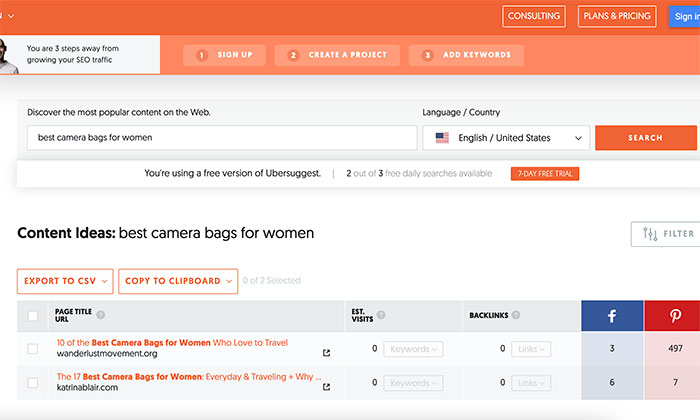
- Search key phrases on Ubersuggest to find blogs that appeal to your target audience.
12. Make Your Website Convert Like Crazy by Making it Mobile Friendly
Ultimately, the goal of much of your inbound marketing strategy is to drive people to your startup’s website.
If you’re not converting people once they arrive, however, what’s the point?
Conversion is the key to successful inbound marketing since it’s the transition from visitor to prospect.

You need to make sure your website is ready to convert your traffic into leads and customers.
It’s the only way to make your startup grow with the traffic you’ve worked so hard to acquire.
The first and most important way to ensure you’re getting the conversions you deserve by focusing on your website’s conversion rate optimization (CRO).
If your startup’s site doesn’t load quickly or has a confusing layout, you’re going to struggle to convert the traffic you’ve worked so hard to drive there. You need to evaluate your site’s user interface (UI) and user experience (UI) through the lens of your target audience. What can you do to make your site simpler and drive visitors into your funnel?
The vast majority of websites aren’t maximizing their CRO, and they aren’t putting in the work they need to make these changes.
Instead of actually converting their customers, they’re losing out on valuable traffic.
Don’t let that happen to you. Your site is more than just the place your leads land. It can be one of your most powerful strategic assets if you focus on CRO and use it well.
Inbound Marketing Tools
Inbound marketing strategies can be pretty effective, but they can be challenging to figure out initially. To help you make the transition from outbound to inbound marketing smoother, I have compiled a few inbound marketing tools to help you strengthen your marketing plan.
These tools can be helpful, but at the end of the day, they’re just tools. It’s you as a marketer who can use them effectively for the best results. Having a deeper understanding of how inbound marketing works can help you strengthen your marketing plan for better reach.
Jotform
Jotform is a free form builder with attractive templates and a ton of desirable features. It’s easy to set up, forms can be designed and edited in minutes, and the results can embed in most content management systems in a click.
Tools like Jotform can help you design beautiful forms for newsletter sign-ups, e-book downloads, service subscriptions, and other inbound marketing practices.
Mailchimp
While tools like Jotform can help you secure sign-ups, you need efficient email marketing and distribution to operate inbound strategies like a lead-generating newsletter. That’s where Mailchimp comes in.
Mailchimp offers free and paid email distribution features. You can customize how your email looks, when it’s sent, what it includes, and more. Mailchimp also lets you create personalized email campaigns unique to each set of subscribers.
Customizable features like these can help you create effective email campaigns to generate, capture, and nurture leads.
Buffer
Social media management is a crucial aspect of inbound marketing. Tools like Buffer can help you improve the effectiveness of your social media marketing plan.
Buffer lets you schedule social media posts to publish content when your target demographic is most active. As a result, no one has to stay awake at odd hours to post content at strategic times.
This tool also automates most of the social media management, so you save time and money. So if you’re a startup with a tight budget, this can help give you a leg up.
Inbound Marketing Metrics To Track
If you want inbound marketing to drive growth, you need to measure the stuff that actually impacts revenue—not vanity metrics like raw traffic or impressions.
Here are the numbers that matter most:
- Qualified leads: Track MQLs/SQLs (or whatever you call “sales-ready”) so you know you’re attracting the right people, not just more people.
- Conversion rates: Measure conversion by step—visitor → lead, lead → opportunity, opportunity → customer. This shows where you’re leaking results.
- Cost per lead (CPL): Even “organic” inbound has a cost (tools, content, labor). CPL keeps you honest and helps compare inbound to paid channels.
- Assisted revenue: Inbound rarely gets the “last click.” Track how content and email influence deals—especially in B2B or high-consideration purchases.
The big rule: watch trends, not one-off spikes. Review these metrics monthly, spot what’s improving (or slipping), and adjust your content, offers, and distribution. Inbound works best when you treat it like a system you constantly tune.
Inbound Marketing Strategy Frequently Asked Questions
What is inbound marketing?
Inbound marketing is the process of attracting customers by helping them first. You publish useful content, optimize it for search, and use conversion points (forms, CTAs, email nurture) to turn visitors into leads and customers. The goal is simple: earn attention with value instead of buying it with interruptions.
What are the types of inbound marketing?
The core types are: content marketing (blogs, guides, videos), SEO (ranking for intent-based searches), social distribution (sharing and community), email nurturing (education and follow-up), and conversion optimization (landing pages, CTAs, offers). The best inbound programs combine these so each channel reinforces the others.
How do you create an inbound marketing strategy?
Start with a clear business goal (pipeline, revenue, retention), then define your target audience and their buying questions. Build content for TOFU/MOFU/BOFU, add conversion paths (lead magnets, demos, trials), and set up nurture sequences. Pick 2–3 channels you can execute consistently, track results monthly, and double down on what drives qualified leads.
How do you develop an inbound strategy?
You need to know the purpose of your content, your target audience, and how your content fits in with the buyer’s journey.
How to measure inbound marketing?
Measure what ties to revenue: qualified leads, conversion rates by funnel step, cost per lead (including content/tooling costs), and assisted revenue (how content influences deals). Ignore one-week spikes. Look at trends over 30–90 days, identify drop-offs, and iterate on content, offers, and distribution.
Is SEO inbound marketing?
Yes, SEO is one of the biggest inbound channels. It brings in people who are already searching for answers, solutions, or comparisons. But SEO alone isn’t the full strategy. Inbound includes what happens after the click, too: content that builds trust, pages that convert, and follow-up that nurtures leads into customers.
Inbound Marketing Strategies Summary
Inbound marketing is the most effective way to increase visitors, leads, and buyers.
To attract customers, you need to understand their needs, aspirations, and struggles. Using that data, create great content that draws them in like a magnet.
You’ll need to include SEO best practices so that customers can find you through search engines.
Once you have the traffic, convert those visitors with free content and influencer marketing that drives leads.
With a compelling email campaign and a high-converting website, you can grow your business like never before.

See How My Agency Can Drive More Traffic to Your Website
- SEO - unlock more SEO traffic. See real results.
- Content Marketing - our team creates epic content that will get shared, get links, and attract traffic.
- Paid Media - effective paid strategies with clear ROI.
Are You Using Google Ads? Try Our FREE Ads Grader!
Stop wasting money and unlock the hidden potential of your advertising.
- Discover the power of intentional advertising.
- Reach your ideal target audience.
- Maximize ad spend efficiency.