



You’re running paid search campaigns. The targeting is dialed in. Your copy is converting. But somehow, your performance is slipping.
You might be getting hijacked.

Ad hijacking is one of the most overlooked threats in paid media. Hijackers will often create their own media or copy to mimic your ads. In many cases, it can be difficult to detect but it’s a bit more obvious on social media (i.e., logos or branding can look off, creative looks cheap or rushed, etc.).
Most marketers don’t even realize it’s happening. And by the time they do, the damage is already done: inflated CPCs, stolen leads, and a polluted campaign performance picture that’s hard to untangle.
In this post, we’ll break down how ad hijacking works, why it’s so hard to spot, and most importantly, how to protect your brand before another click is lost.
Key Takeaways
- Ad hijacking distorts campaign performance and ROI by intercepting high-intent branded traffic, inflating CPCs, and misattributing conversions, often without triggering any obvious red flags.
- Affiliate partners are responsible for 75% of ad hijacking, exploiting gray areas in tracking and enforcement to earn unearned commissions while polluting your paid media data.
- Hijackers rely on stealth tactics like geo-targeting and cloaking, making manual detection nearly impossible without dedicated tools and a consistent monitoring framework.
- The financial and strategic impact compounds over time, from wasted ad spend to long-term damage to data integrity, attribution modeling, and brand trust.
- Preventing hijacking requires operational readiness—tight affiliate governance, legal escalation playbooks, automated detection tools, and performance audits baked into your paid media routine.
Table of Contents
- Key Takeaways
- What Is Ad Hijacking?
- A Real Ad Hijacking Example
- How Ad Hijacking Hurts Your Brand
- How to Spot Ad Hijacking
- How to Stop (and Prevent) Ad Hijacking
- How Agency Partners Can Help
- FAQs
- Conclusion
What Is Ad Hijacking?

Ad hijacking happens when unauthorized third parties imitate your paid ads, often word-for-word, and redirect traffic intended for you to their own landing pages. These bad actors typically bid on your branded keywords, making users think they are clicking on your ad, when in fact, they’re not.
The most frustrating part of hijacking is that it often goes unnoticed. Your metrics may look fine at a glance, but in reality, you’re losing clicks and conversions.
So, who’s behind these lookalike ads and what’s in it for them? Let’s break down the usual suspects.
Who is Behind Ad Hijacking?
Affiliate partners are a popular source of ad hijacking, accounting for about 75%. Some handle their advertising responsibly, but others bid on your branded terms, mimic your ads, and collect commission on traffic you should have earned instead of driving new traffic.
In some cases, competitors are behind the hijack, intentionally siphoning off traffic to gain an edge. Other times, ad hijacking is done by mistake due to dynamic keyword insertion – when a competitor bids on your branded terms and has the ad platform dynamically insert headlines. This could end up pulling your branded name into ad copy unintentionally.
Why do they do it? Because it works—until they get caught. It’s a low-effort way to cash in on your ad spend, often at your expense.
Now that you know who’s behind it, let’s look at how ad hijacking actually works in practice.
How Does Ad Hijacking Work??
Ad hijacking starts with someone—usually an affiliate—bidding on your branded keywords. They replicate your ad copy so closely that it’s nearly indistinguishable from the real thing.
When a user clicks the hijacked ad, they’re taken to a site controlled by the hijacker. That site might redirect back to yours (so they earn a commission) or route traffic to a completely different offer or competitor.

So, why is it so hard to catch?
What Makes Ad Hijacking So Hard to Spot?
Ad hijacking is deceptive by design.
Hijackers often use geo-targeting to limit exposure, so you may never see the fake ad unless you’re searching from a specific location. They also rotate campaigns, run ads at odd hours, or use cloaking to show one thing to users and another to brand monitors.
To the average user, there’s no obvious red flag. The ad copy looks familiar, and the destination may even be your site, just routed through an affiliate link.
Advertisers can’t monitor every impression or every bid. And that’s exactly why hijackers thrive.
Let’s look at what this looks like in the real world.
A Real Ad Hijacking Example
Let’s look at an audit we did for AARP. On the surface, things looked stable, but after digging, we noticed a shocking amount of ad hijacking.
After a quick search of Meta’s ad library, we found over 100 ads were being run by affiliates for AARP-branded products. You can see some of the examples here:


All of these ads directed us to third-party insurance providers like Surf Tags, Urban Market, and Consumer’s Buzz. While, on the surface, it’s not unusual for third-party providers to promote other branded products in the insurance industry, we needed to make sure these accounts weren’t spammy or hurting our performance.
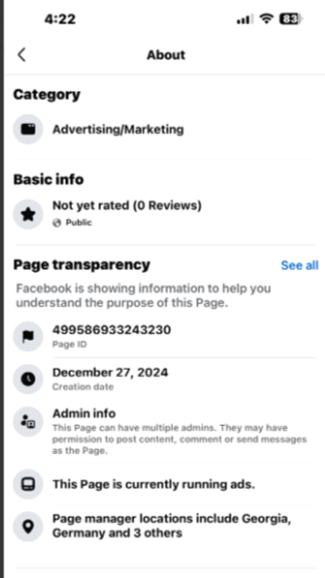
To do that, we took a deeper dive into where some of these ads were coming from:

One of the tell-tale signs of brands using scammy marketing practices is their profile. If they aren’t a legitimate business, the profile will typically be very new or have very few followers. If you find these types of profiles during your research, you may be able to flag them through Meta or whatever platform you’re using.
Ultimately, we were able to conclude that the AARP ads were, in fact, instances of ad hijacking. By reaching out to the client, we were able to determine they didn’t have a relationship with the above affiliates (social images). In terms of search, they were also not affiliated with AARP and were likely an instance of dynamic keyword insertion (competitor bidding on our name brand as a keyword and having a dynamic headline within their ad copy).
How Ad Hijacking Hurts Your Brand

Ad hijacking isn’t just a nuisance—it creates ripple effects that can quietly erode your paid media strategy from the inside out. Let’s break down how it damages performance, budget efficiency, and brand equity.
1. Higher CPCs
When hijackers bid on your branded keywords, they drive up the auction price. Even if you win the bid, you pay more per click just to compete with bad actors targeting your own branded terms. These inflated costs add up fast, especially across high-volume campaigns.
2. Stolen Conversions
Affiliates or competitors may claim conversions that your site would’ve gotten anyway. You lose attribution clarity, and, in affiliate scenarios, sneaky redirect links may guide traffic to an affiliate’s checkout page, giving commissions to affiliates that could’ve went toward your revenue.
3. Lead Leakage
When hijacked ads redirect to off-brand or low-quality landing pages, these leads wind up stolen or hard to track. Not only will you be losing potential revenue, but it will also become almost impossible to track and monitor your campaign performance.
4. Damaged Brand Perception
Hijacked ads can take users to misleading, irrelevant, or even scammy offers. If a bad experience follows, users don’t blame the hijacker—they blame you. Trust and credibility take a hit, even if you never authorized the ad.
5. Performance Pollution
Ad hijacking corrupts your campaign data, skewing metrics like CTR, ROAS; skewing conversion attribution. This makes optimizing for performance difficult because you’re making decisions based on misleading signals.
How to Spot Ad Hijacking
Ad hijacking tactics can be pretty stealthy, making it hard to spot before it’s too late. Additionally, you need to be on the lookout for two types of hijacking: affiliate and competitor.
Competitor hijacking is from, you guessed it, your competitors’ bidding for the same keywords. Affiliate hijacking is done by entrepreneurs who use redirect links to list products or services on their website in hopes of earning a commission. Depending on your product or industry, this could really pull from your marketing juice.
An easy way to do this is to type branded keywords into the ad platform’s search. We were able to do this for AARP and found over 100 ads running on Meta in the brand’s name. That level of hijacking can seriously dilute your marketing efforts!
Regardless of which type of hijacking you face, here are some tried and true tactics to bring it to the surface and stop it before it drains your campaigns.
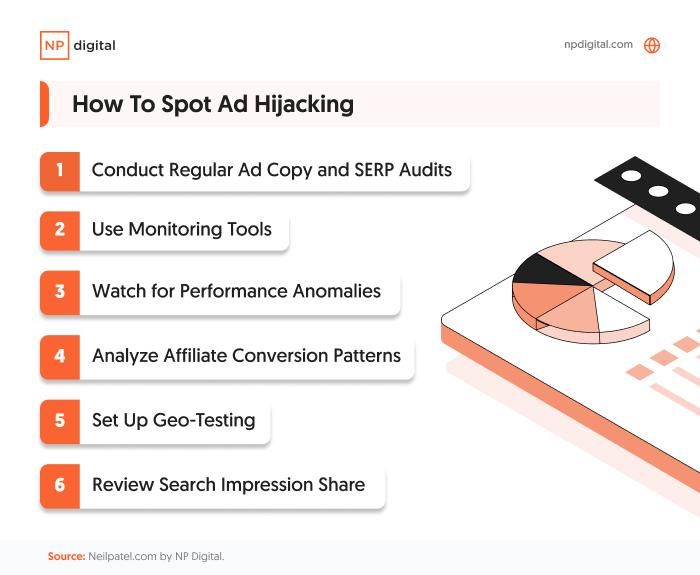
1. Conduct Regular Ad Copy and SERP Audits
Search your branded keywords manually and inspect the ads that appear. Look for exact or near-exact matches to your own copy. If something feels off, especially if it’s linking to a different domain, it might be a hijack.
In-platform tools like Meta’s Ad Library make it easy to run audits. You can quickly search any ad copy related to your branded and non-branded keywords, uncovering any spammy or unauthorized campaigns.

2. Use Monitoring Tools
Platforms like Adthena, BrandVerity, or The Search Monitor specialize in detecting unauthorized ads. These tools crawl SERPs across geographies and time zones, surfacing copycat ads you might never see through manual checks. They also help log violations and create a paper trail.
3. Watch for Performance Anomalies
Sudden dips in conversion rate, higher-than-normal CPCs, or unexpected shifts in affiliate traffic could be signs that someone else is intercepting your clicks. If performance tanks without a clear reason, dig deeper.
4. Analyze Affiliate Conversion Patterns
If you use affiliate partners, monitor the who, where, and how of each conversion. Unusual spikes in one region, sudden increases in branded keyword conversions, or unexplainable affiliate surges could all indicate hijacking behavior.
5. Set Up Geo-Testing
Many hijackers geo-target their ads to avoid detection. If you run international campaigns, use VPNs or third-party testing tools to check SERPs from different locations.
6. Review Search Impression Share
A drop in impression share for your branded keywords, without budget cuts or major strategy changes, can indicate that someone else is bidding aggressively against your brand.
Ad hijacking often hides in plain sight. But with these tactics, you’ll spot the red flags faster—and move from reactive to proactive protection.
How to Stop (and Prevent) Ad Hijacking
Spotting ad hijacking is only half the battle. Once you’ve confirmed it’s happening—or if you want to get ahead of it—you’ll need a layered defense strategy. Here’s how to stop the damage and prevent future losses.
1. Tighten Affiliate Contracts
If you work with affiliate partners, review your contracts immediately. Make sure they explicitly prohibit bidding on branded keywords or copying ad creatives. Include language that defines ad hijacking and outlines specific consequences for violations.
2. Implement Monitoring Tools
Don’t rely on manual checks. Leverage the technology of PPC tools to spot and stop ad hijacking.
Some tools even provide automated alerts and takedown request templates, making enforcement faster and easier.
3. Build an Internal Response Process
Create a workflow that outlines what to do when hijacking is detected. Who collects evidence? Who contacts affiliates? Who files complaints? The faster your team can act, the less damage your campaigns will absorb.
Include a regular cadence for audits—even if it’s just a monthly sweep using a monitoring tool or third-party scan.
4. Optimize Your Campaign Settings
Consider adjusting campaign settings to make hijacking harder. This ensures your ads are only going after the specific keywords you’re targeting.
You can also tighten geo and device targeting to block spammy affiliate ads that may come from overseas. Lastly, monitor impression share on branded terms to ensure it’s not being inflated by hijacked ads.
5. Educate Your Team and Stakeholders
Many paid media teams are so focused on performance metrics that they overlook ad integrity. Host training sessions that walk through what ad hijacking looks like, how it happens, and what each team member can do to catch or report it.
Make it clear: This isn’t just a traffic issue—it’s a brand protection issue.
6. Use In-app protections
The platforms you use to advertise can help prevent ad hijacking. Google enables you to work with a rep or via their support portal to report trademark infringement. TikTok, which is rapidly growing as a paid ad platform, also allows you to report trademark violations, and the same goes for Meta.
Meta has a Brand Protection tool that will help. This is important because often hijackers create hundreds of ads on the platform and run them together. This can make stopping each individual ad difficult. Additionally, once you get one ad shut down, they could simply create and run another.
As marketers, it’s important that we explore the full capabilities of the platforms we’re using. With ad hijacking being such a common problem, looking into the fine print of what your advertising platforms can do to help resolve issues is just as important as the metrics and ad capabilities they offer.
7. Consider Agency Support
If your team doesn’t have the bandwidth or expertise to monitor threats 24/7, consider partnering with a paid media agency specializing in affiliate management and brand safety. Agencies often bring broader monitoring capabilities, legal resources, and strategic enforcement playbooks.
Stopping ad hijacking takes vigilance, but it’s worth the effort. The earlier you put protections in place, the less you’ll bleed from invisible losses.
How Agency Partners Can Help
Ad hijacking is complex, fast-moving, and easy to miss—especially for in-house teams juggling multiple priorities. That’s where agency partners can offer real value.
Experienced agencies bring specialized tools and expertise that most internal teams cannot access. From real-time monitoring platforms to built-in response workflows, they help you detect and address hijacking before it becomes a drain on your campaigns.
They also offer affiliate oversight, ensuring partners stay compliant and rogue actors get flagged quickly. If enforcement is needed, agencies often have legal support or direct lines to ad platforms, which can speed up takedowns.
Just as important: agencies take a proactive approach. They audit campaigns regularly, review branded keyword performance, and help build long-term protection strategies tailored to your business goals.
When you work with a strategic partner, you’re not just patching problems but preventing them. That kind of foresight can be the difference between a leaky paid media budget and one that scales profitably.
If ad hijacking has ever flown under your radar, it’s worth asking: Do we have the tools and time to catch it before it costs us more?
FAQs
What is affiliate ad hijacking vs. competitor hijacking?
Affiliate ad hijacking occurs when someone in your affiliate program (or sites you’re not directly affiliated with) mimics your ads, bids on your branded keywords, and earns commissions for traffic they didn’t actually drive. It violates affiliate agreements and skews performance data.
Competitor hijacking is more aggressive—occasionally this can be done by accident through dynamic keyword insertion, but oftentimes direct rivals impersonate your ads to reroute traffic to their own sites, stealing conversions, leads, and market share while degrading your brand’s search visibility and trust.
Can ad hijacking impact SEO rankings?
While ad hijacking doesn’t directly affect SEO rankings, it can indirectly hurt your search performance. Hijacked ads often redirect to off-brand or spammy pages, confusing users and leading to higher bounce rates or poor engagement metrics. This can erode trust signals like brand searches and click-through rates over time, both of which Google pays attention to. Also, if bad actors use black-hat tactics, your domain could be mistakenly associated with them.
How much revenue can brands lose to ad hijackers?
The loss varies, but it adds up fast. Hijacked ads often steal high-intent clicks, especially from branded search terms that typically convert well. If you’re paying for those clicks—or worse, paying commissions on top—you could lose thousands each month without realizing it. For large brands, annual losses can hit six or seven figures. And beyond direct revenue loss, hijacking pollutes data and inflates acquisition costs.
Are there free tools for small businesses to monitor hijacking?
Yes—there are a few free or low-cost options. Start with manual checks using Google’s Ad Preview Tool, or set up alerts via Google Alerts for your branded terms. Meta’s Ad Library is also a quick way to uncover hijacked ads.
SERPWoo also offers limited free SERP tracking. Many tools, like Adthena or BrandVerity, offer free trials or demos for more consistent coverage. You can also use browser VPNs like TunnelBear to spot geo-targeted hijacks by checking search results from different locations.
Conclusion
Ad hijacking can be a silent, ongoing threat to your paid media performance. It can bleed your budget, steal conversions, and undermine your brand’s credibility. And the worst part is most teams don’t know it’s happening until the damage is done.
It doesn’t matter if affiliates are gaming your system or competitors are hijacking your branded terms; the impact—inflated CPCs, polluted data, and missed revenue opportunities—is real. That’s why it’s critical to understand ad hijacking and take steps to prevent it.
Tightening affiliate agreements and using brand monitoring tools will boost your ad visibility and insights, putting you on the path to protection. Add proactive auditing, enforce platform policies, and consider agency support when bandwidth or in-house tools fall short.
As AI, automation, and affiliate networks grow more complex, the potential for abuse will only increase. Now is the time to build a strategy that doesn’t just react to hijacking but actively defends against it.
Looking to stay ahead of threats like ad hijacking while scaling your campaigns with confidence? NP Digital offers performance-driven paid media support and affiliate program oversight to keep your brand protected and profitable.
Are You Using Google Ads? Try Our FREE Ads Grader!
Stop wasting money and unlock the hidden potential of your advertising.
- Discover the power of intentional advertising.
- Reach your ideal target audience.
- Maximize ad spend efficiency.