 Sign In


 Ubersuggest
  AnswerThePublic

Key Takeaways
- Real estate marketing is about adapting marketing fundamentals—best summarized by the “Four Ps” (Product, Place, Price, and Promotion)—to a real estate context.
- Well-executed real estate marketing builds trust, increases memorability, and provides tested channels to promote new listings quickly and cost-effectively.
- Real estate marketing has five components: define your ideal customer, refine positioning, create an attractive site, put together an omnichannel digital marketing plan, and identify feasible offline channels.
- A comprehensive tech stack, which includes social media, CRM, SEO, graphic design, and advertising tools, allows you to automate and scale your marketing.
Most real estate agents aren’t natural marketers. And this is very good news for you.
By arming yourself with a solid plan, you’re giving yourself a razor-sharp competitive edge.
Even better, once the foundations are in place, most real estate marketing strategies require only modest investments of time and money.
Yet the long-term benefits are substantial: wider reach, greater credibility, and, of course, faster property deals.
What Is Real Estate Marketing?
Real estate marketing is the art and science of promoting properties available for sale or rent. It takes the Four Ps of marketing—Product, Price, Place, and Promotion—and adapts them to the real estate market.
Real estate marketing is important because of the hyper-competitive nature of the industry. It provides realtors with a powerful competitive edge.
Specifically, real estate marketing achieves the following three outcomes:
- Builds trust with your customer base: A consistent presence assures potential buyers that you are the right person to help them find their dream property.
- Makes you more memorable: A recognizable brand increases the chances that buyers will seek you out when they enter the market.
- Enables you to sell more efficiently: A long-term marketing strategy provides established channels to quickly promote new properties when they become available, cutting down on promotion and admin costs.
How to Create a Real Estate Marketing Plan: 5 Steps
Real estate marketing is about good marketing fundamentals adapted to the nuances of the property market.
It involves clearly defining target customers, creating consistent, attractive promotional assets, and putting together a comprehensive omnichannel campaign.
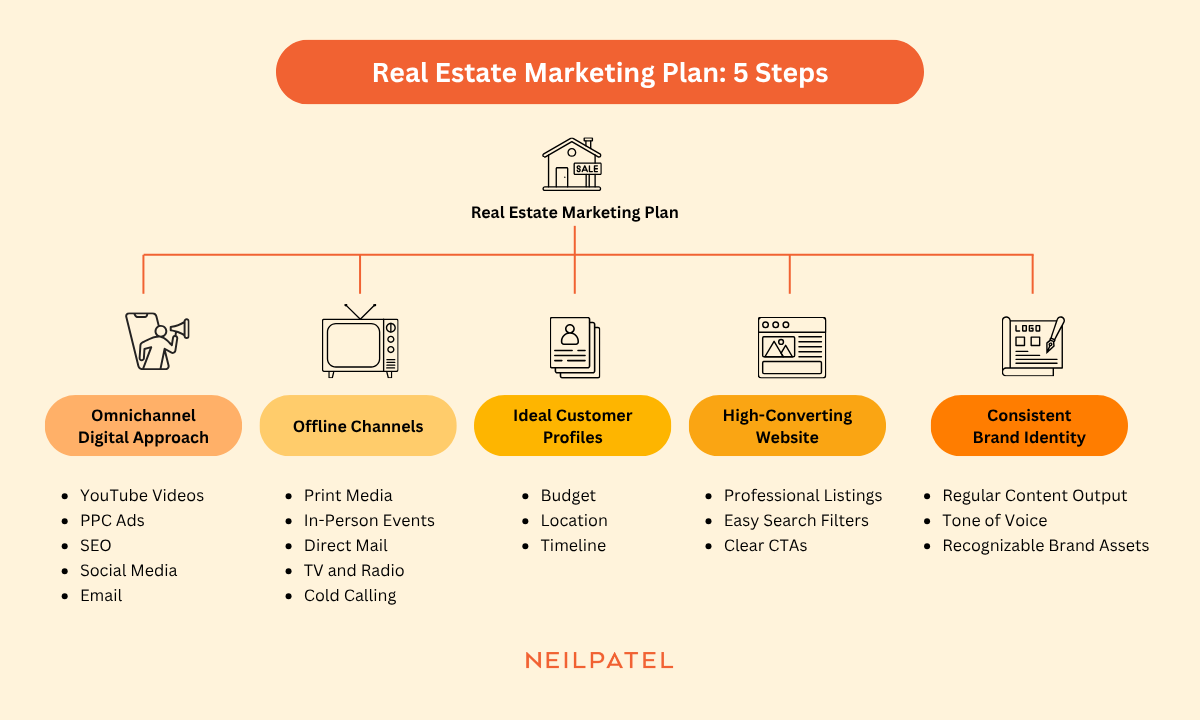
Once your plan is in place, it provides you with repeatable channels for quickly and cost-effectively reaching eager buyers with new listings.
1. Define your ideal customer profiles (ICPs)
What type of people are searching for the properties you offer?
Most real estate agents have a good gut understanding of their ideal customers. But it’s important to map them out in clear terms, as these definitions will form the basis of your real estate marketing plan.
Most agents typically target several distinct ICPs that cover a whole portfolio of properties for rent and sale.
Here are three example ICPs:
- Three to four-person families with a joint annual income of $150,000 looking to purchase suburban detached or semi-detached houses
- Young professionals with high disposable income searching for inner-city apartments to rent in the $2000 to $3000/month price range with an active local nightlife nearby
- Retirees with a budget of $300,000 to $500,000 in the market for semi-rural properties with good car access to local amenities like hospitals, supermarkets, and shops
Research the following attributes when putting together your customer profiles:
- Budget for rent or purchase
- Desired location and property type
- Specific property features (garage, toilets, garden)
- Timeline (weeks or months)
- Required nearby amenities (schools, transport, roads, etc.)
- Investment vs. resident purchase
Remember that a customer profile or buyer persona is not a description of one individual customer. Rather, it is a composite that describes the most important shared characteristics of the various segments of your target market.
2. Ensure a consistent brand identity
Branding is a long-term play. My research shows that it takes five years and up to build a recognizable brand. Consistency and a long-term outlook are key.

However, once you’ve passed that five-year mark, you’ll have an incredibly valuable asset, one that will allow you to market and sell properties quicker—and even at a higher price point—than your competitors.
Here are the three main components of effective brand building:
- Regular content output: Regularity is the key to building awareness and memorability. If you repeatedly appear in your prospects’ email inboxes, social media feeds, and search results, you’re more likely to be thought of (or recommended) when members of your audience are ready to buy.
- Tone of voice: This refers to the “style” of your content—are you polished and professional to resonate with luxury buyers, or do you adopt a more conversational, authentic tone to appeal to families and first-time buyers?
- Recognizable brand assets: Assets include your logo, website color scheme, personal attributes (such as the style of your clothing on videos), email template, etc.
3. Create an attractive website with detailed listings
When does marketing end and sales begin?
The common crossover is between what are called marketing-qualified leads (MQLs) and sales-qualified leads (SQLs).
An SQL is a lead that has shown a high degree of interest in your product and is deemed likely to buy. They’re ready for a salesperson—in this case you, the estate agent—to take over.
Your website, or a third-party real estate website, is where this transition usually happens. A potential buyer views your content, or perhaps several different pieces of content, and clicks through to look at your listings. They then either book a viewing or leave.
With this in mind, you had better make sure your website is the business.

Here’s a quick checklist for high-converting real estate website design:
- Sleek, minimal design
- Easy-to-use search filters
- High-quality images
- Video walkthroughs of properties
- Comprehensive property descriptions
- Transparent pricing
- A map for visualizing locations
- Clear “Book a Viewing” calls to action (CTAs)
- Visible address and phone number
- Customer testimonials if appropriate
4. Build an omnichannel digital approach
You’ve defined your ICP, refined your tone and brand identity, and designed a website primed for conversions.
Now it’s time to start promoting your listings.
My team and I found that the average customer requires 11.1 marketing touchpoints on average before they make a purchase. This means an omnichannel strategy—that incorporates multiple marketing techniques—isn’t just a nice-to-have. It’s non-negotiable.

In addition, people are increasingly adopting a “search everywhere” approach to finding information. We found that while Google (organic search) has the highest number of searches (8.5 billion), other platforms account for tens of billions of searches.
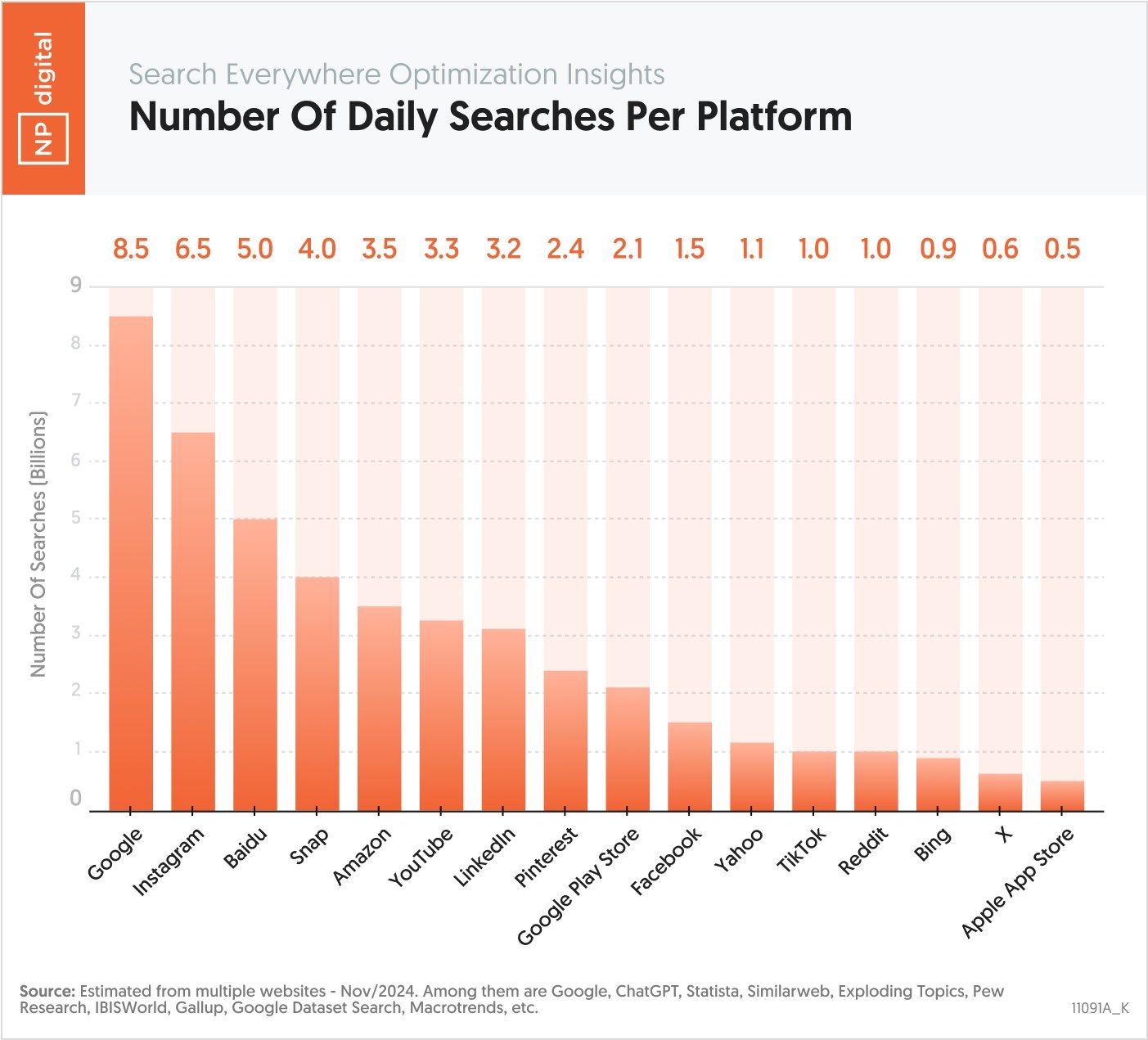
A digital presence across multiple platforms is the best way of guaranteeing fast sales. Instagram, in particular, is popular with real estate agents, with 52% citing it as their top channel.
Take advantage of all the following channels as part of your omnichannel strategy:
- YouTube videos: Publish property walkthroughs and more general video content, such as “The Top 10 Places to Live in Chicago,” that might appeal to your target market.
- PPC ads: Pay-per-click ads showcase your listings (or broader ads) across platforms like Google, Instagram, and Facebook.
- Search engine optimization (SEO): SEO involves optimizing your Google business profile to appear in local results and creating content on your website that will rank for keywords your prospects are searching for.
- Organic social media posts: Social media posts, especially real estate videos, are one of the top lead generators for agents.
- Paid social media posts and ads: You can often “boost” social media posts and target them at specific ICPs.
- Email: This is a big one that’s often overlooked by real estate agents and agencies, yet weekly or monthly email roundups of properties sent to active buyers can drive high conversions.
5. Identify viable offline marketing channels
Real estate marketing has shifted online over the last decade. However, there are still significant and often underleveraged offline opportunities.
For example, research shows that direct mail has a 112% return on investment (ROI), outperforming both email and search.
Consider all of the following marketing channels as part of a multi-pronged plan:
- Print media
- In-person events
- Direct mail
- TV and radio
- Cold calling
Must-Have Tools for Fast, Automated Real Estate Marketing
Running an omnichannel real estate marketing campaign manually is practically impossible, even if you have a dedicated marketing team.
Tools allow you to automate, scale, and (crucially) test. All of this means one thing: more sales, faster. What’s more, building a high-octane tech stack is relatively inexpensive.
Here’s an overview of must-have real estate marketing apps:
- Hootsuite: A social media tool that allows you to schedule posts across multiple platforms from a single dashboard.
- Canva: A graphic design platform for non-designers with templates for real estate videos, ads, social media posts (like carousels), emails, and more.
- Follow Up Boss: A real estate-focused customer relationship management (CRM) platform to store lead details, track intent, and automate follow-ups.
- Ubersuggest: My SEO tool (designed for ease of use and fully beginner-friendly) to identify keyword opportunities, generate content ideas, and track rankings.
- Mailchimp: A newsletter management app with easy-to-set-up lead capture forms and email broadcast and segmentation features, ideal for sending property roundups.
- Google Ads and Meta Ads: The web’s two top platforms for PPC and retargeting ads.
Of course, you don’t need to use exactly these tools. Just ensure that your tech stack accounts for all the areas of functionality you need.
Real Estate Marketing Ideas and Examples
Understanding the theory is one thing. But what do real estate marketing plans look like in practice?
Let’s look at some practical examples of the techniques and strategies described above.
Listing website: High-quality pictures and comprehensive descriptions
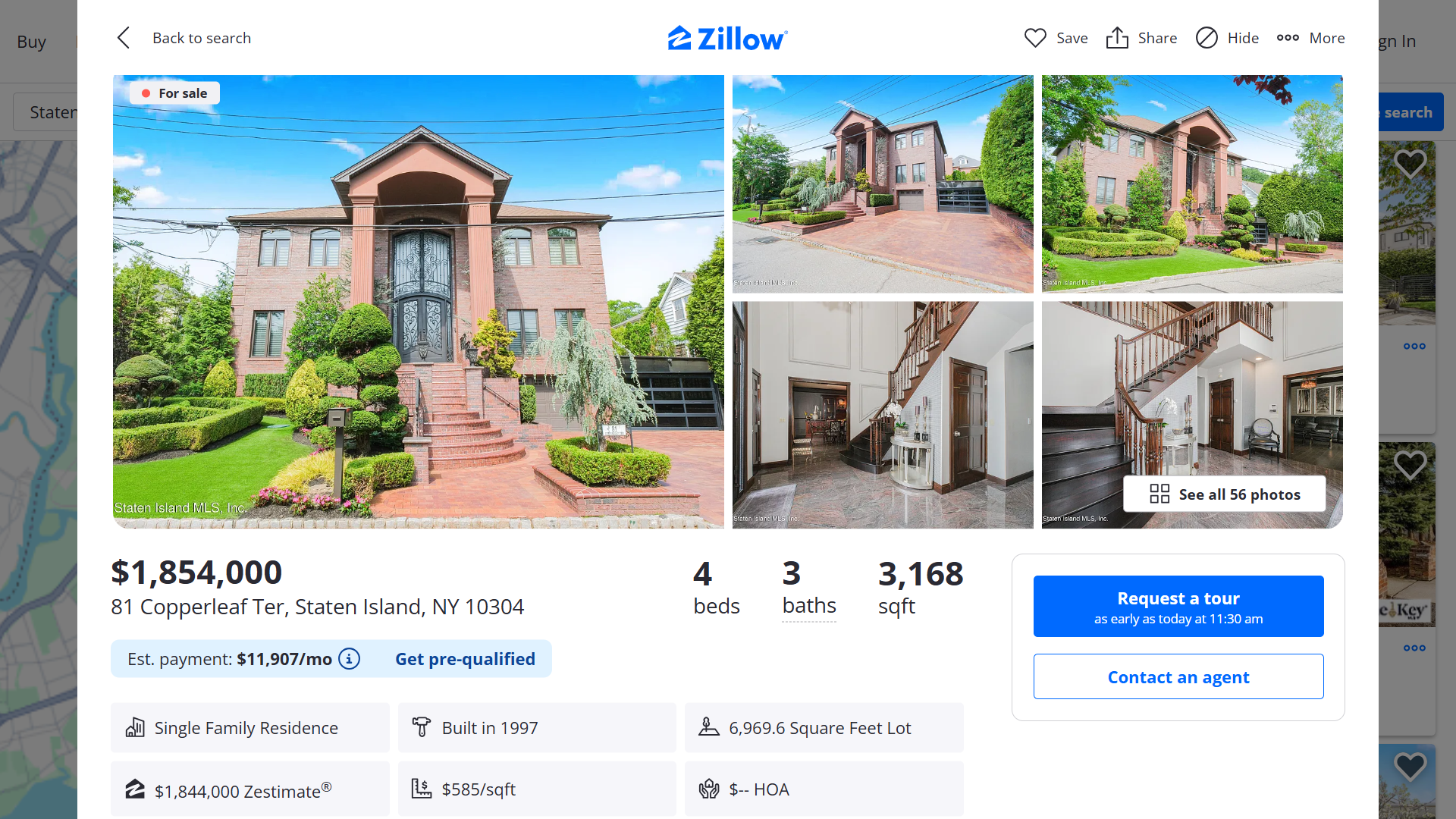
Marketing isn’t just about getting eyeballs on your listings. You need to convert them once they’re there, encouraging them to hit that “Request a tour” or “Contact an agent” button.
The example above meets several best practices. There are lots of images, which give a comprehensive view of the property and outdoor areas, and they’re all of a high quality. Scroll down, and you’ll also find a detailed description.

Google PPC ads: Attention-grabbing ad copy
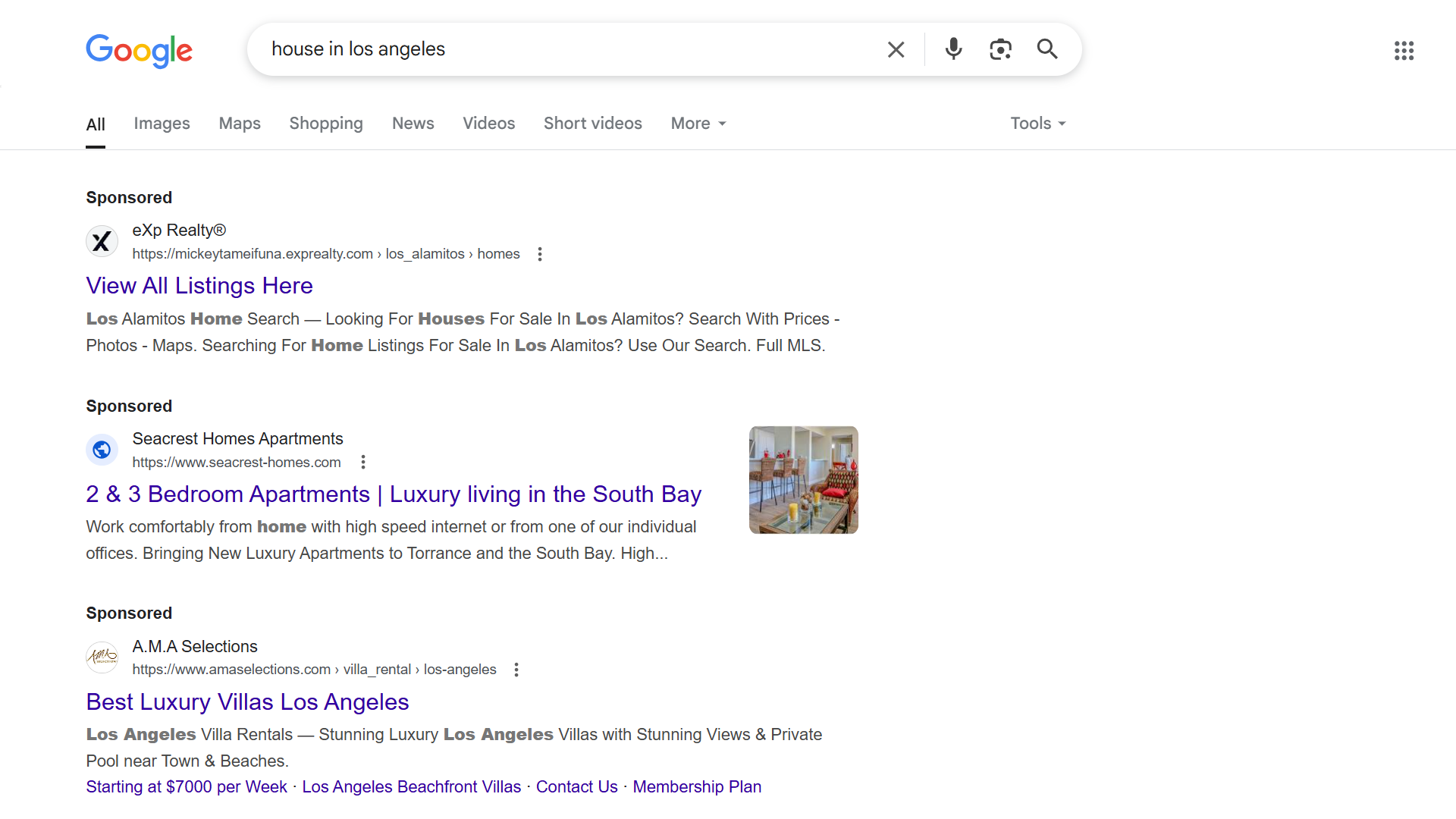
The Google ads above combine both evocative and descriptive language: “Luxury Living,” “Best Luxury Villas,” “Stunning,” “High Speed Internet,” “2 & 3 Bedrooms,” “Private Pool,” and so on.
The key with Google Ads is not to overcomplicate your message. Keep things simple, clearly state what you’re offering, and highlight your best features. Remember, you’re speaking to people that are actively looking to buy. You don’t need to pull any ultra-persuasive Jedi mind tricks.
TV ad: Short and sweet
Ads are about memorability. This ad crafts a humorous, charming story with a clear message: you should have gotten in touch with Ron Posner at Century 21.
Social media: Luxury rental

This Instagram video from DDRE Global, a company run by celebrity estate agent Daniel Daggers, does a lot right.
It showcases Dan’s personality, gives a thorough walkthrough of the property (with emphasis on standout features) and surrounding areas, and has an excellent soundtrack.
YouTube video: Real estate roundup
This is a guided walkthrough of properties in different boroughs that will appeal to a wide customer base researching where to buy in New York City. Cleverly, the real estate agent uses his own listings to showcase what’s available.
SEO: Keyword-focused content

In this example, Spyglass Realty has published a blog post about the best suburbs of Austin to live in.
The aim here was to showcase their brand to buyers that are researching a particular area. By establishing themselves as a trustworthy source of information, buyers are more likely to pick them as their realtor.
With SEO content, remember that readers are often in-market buyers. After landing on an informational blog post, a substantial portion of visitors will click through to check listings.
Local SEO: Business profile
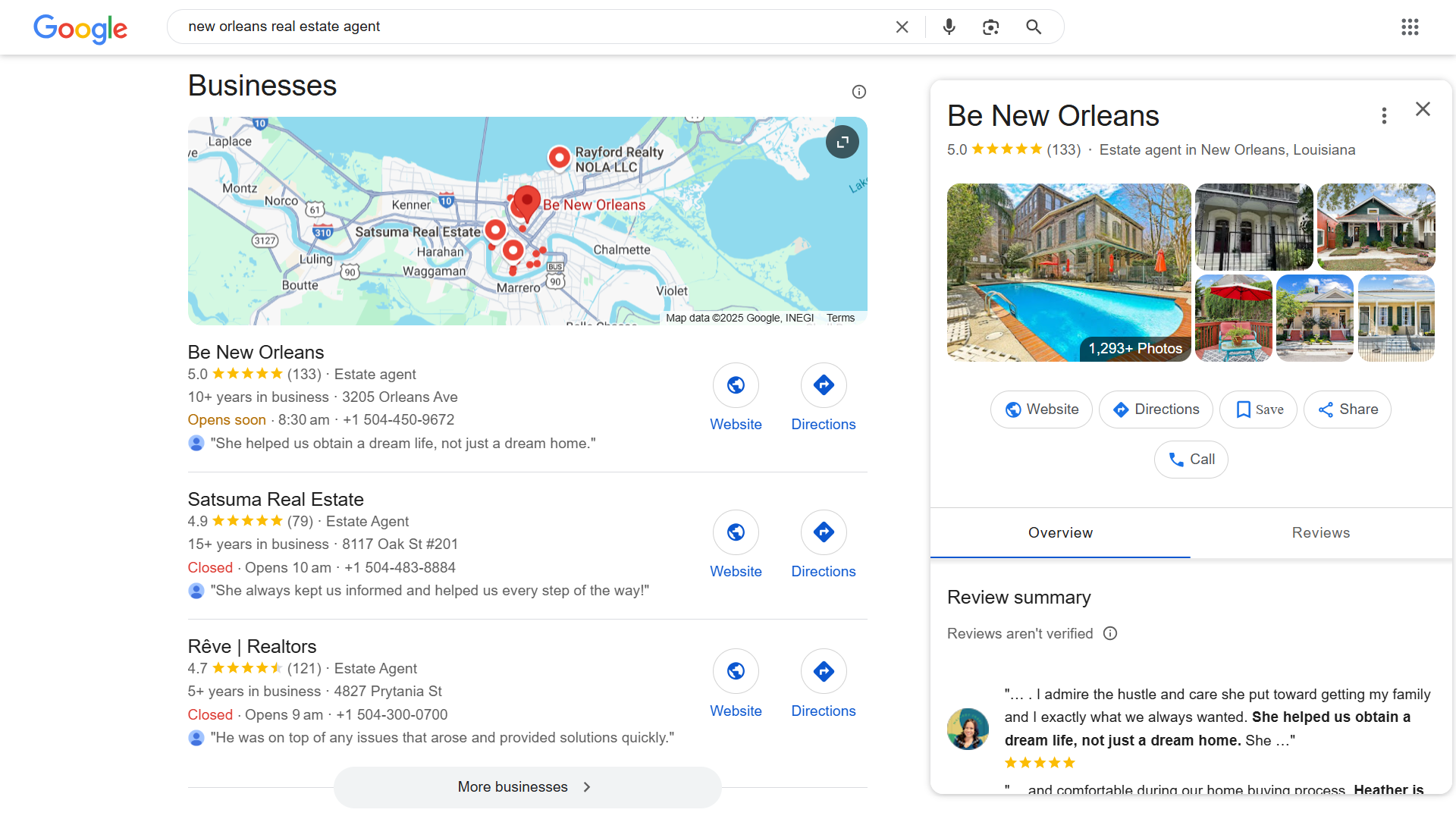
In the example above, Be New Orleans, a real estate agent in New Orleans, has a well-optimized, complete profile.
It has a good number of five-star reviews, a website link, a visible phone number, and up-to-date opening hours.
You’ll also notice that the photos (of which there are many) are of a high quality. This communicates professionalism and gives searchers a taste of the style of properties on offer.
Traditional ads: “According to Our Mothers” billboard

Bozeman Real Estate Group goes for humor in this billboard ad with the statement “#1 Real Estate Company in the World, According to Our Mothers.” This will almost certainly make a lasting impression.
The team photo also communicates friendly, positive brand values. Importantly, the number of the agency is clearly displayed.
Newsletter marketing: Monthly listing roundup

Martin & Co is a UK estate agent. The company sends out regular newsletters to its subscribers, which are segmented by area.
This is an excellent strategy for leads that handed over their email to book a viewing but didn’t show or buy. It ensures that they’ll see other properties they may be interested in.
Event: Investor training
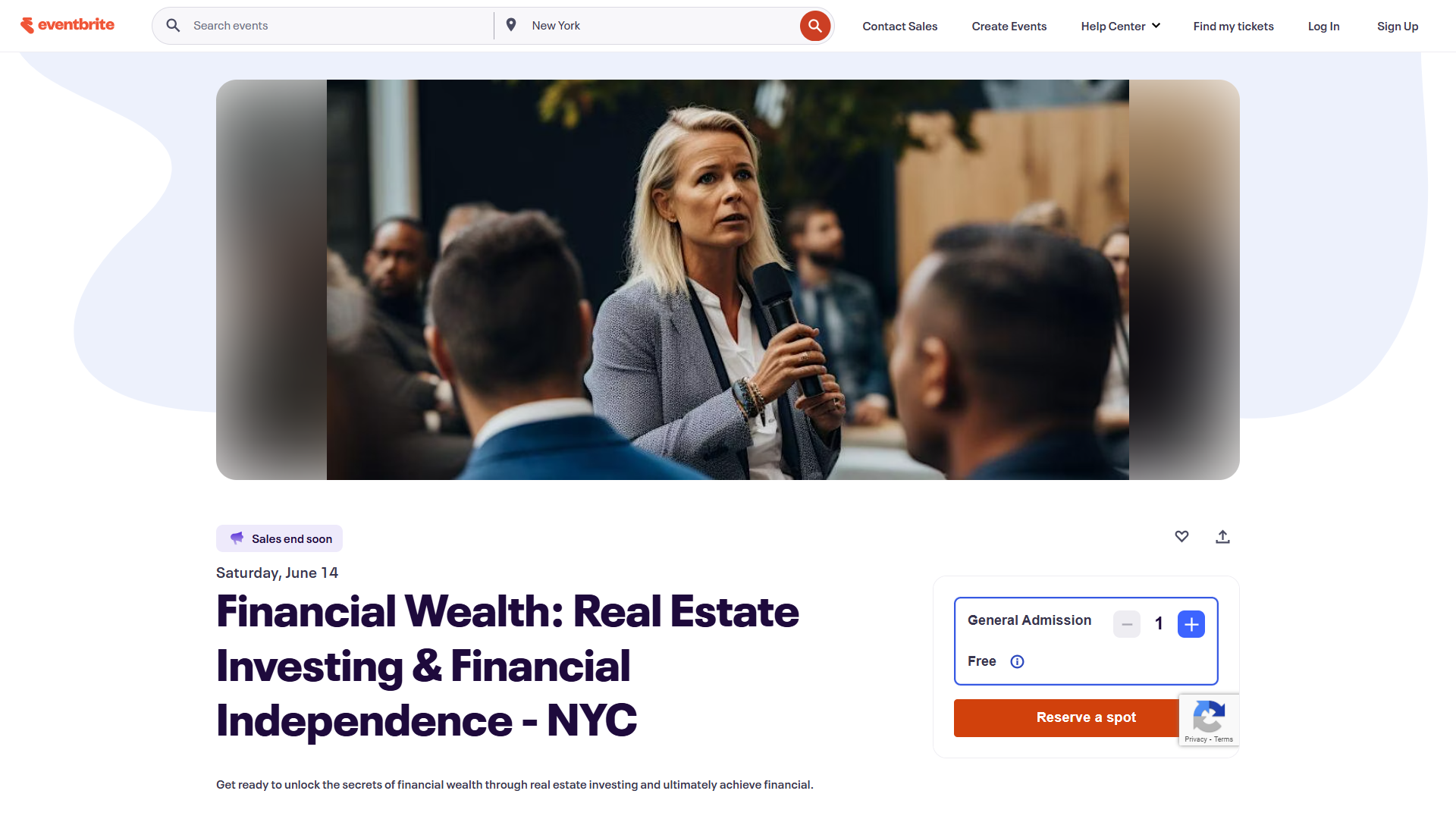
This event is targeted at investors, not home buyers, in the NYC area. If commercial buyers make up a section of your target market, organized meetups and training like this can be lucrative.
Paid visual ad: Investment opportunity

This is a LinkedIn ad (a good platform for commercial investors) for an event about an investment opportunity in Boston.
It is clear, highlights the main benefits (proximity to transport and university campuses), creates scarcity by stating “Limited Space,” and also briefly touches on the credentials of the speakers.
Why a Long-Term Outlook Is the Secret to Success
It takes many years to build a credible, memorable brand. Growing an audience, mailing list, and search engine presence are equally time-intensive.
However, once you have these assets in place, you have the best possible foundation for a long, lucrative career in real estate. It doesn’t matter if you’re running a country-wide agency or you’re a single agent focused on a specific locale.
Real estate marketing is all about building profitable channels that help you reach the right people and close deals. Just remember that success is all about long-term consistency. Small, regular steps win the race.
Are You Using Google Ads? Try Our FREE Ads Grader!
Stop wasting money and unlock the hidden potential of your advertising.
- Discover the power of intentional advertising.
- Reach your ideal target audience.
- Maximize ad spend efficiency.