




Let’s be honest: Consistent content creation can be a huge pain.
Trust me, I know.
After blogging on a near-daily basis with well over 4,000 posts to my name, I’ve encountered just about every roadblock you can possibly imagine.
From crushing cases of writer’s block to digging for topics that make readers tick, there’s no denying the challenges of showing up day after day with fresh content for your audience.
Yet there’s also no denying the benefits of blogging, and that’s exactly why you can’t afford to ignore your long-term commitment to content.
HubSpot notes that 60% of marketers list blog content as their top inbound priority. Meanwhile, marketers that blog regularly receive approximately 67% more leads versus those who don’t.
The more you blog, the more likely you are to build a foundation of traffic and leads over time.
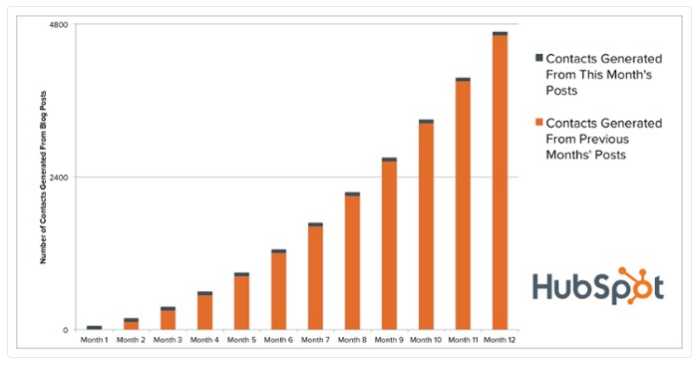
But you probably already know all of this, don’t you?
The real question burning up most marketers is this: How do you know if your content is truly paying dividends? How can you be sure that you’re getting the most bang for your buck, given the sheer amount of time and resources it takes to craft a new piece?
If you’re a marketer that’s putting their blood, sweat, and tears into your content, yet see little to no content marketing ROI, you’re certainly not alone. Only 41% of marketers actually see a positive ROI for their content marketing efforts.
Ouch.
Unfortunately, I see this all the time.
There are many reasons why your content might flop, but there’s one particular problem that plagues most marketers I work with (hint: it’s probably not because you’re a lousy writer).
Ultimately, it comes down to how you spend your time.
Most marketers are horribly inefficient when it comes to the time they spend on any given piece of content.
Here’s the thing, though: I’m not talking about the time spent writing or editing. I regularly craft quality blog posts within two hours without breaking a sweat. Chances are, you can too.
Their inefficiency comes from how they treat their content after they hit “publish.”
After all, you can be doing everything right in terms of on-page optimization and still see little to no engagement from readers and SERPs alike.
In an era where more than 2 million blog posts are published per day, promotion is the crucial piece to the marketing puzzle that’s so important but also so easy to screw up.
If you aren’t taking the time to squeeze the most out of your content in terms of promotion, you’re shooting yourself in the foot.
If seeing results is what you want from your content, from more shares and comments to “likes” and leads, perhaps it’s time to rethink how you spend your time creating content.
Stop Thinking of Content in a Vacuum
First and foremost, ask yourself: What am I trying to accomplish with my content? What are my goals?

Although the goals for any given brand will be different in terms of creation, the goal of promoting your content is straightforward.
Your ultimate goal should be to get every piece of content in front of as many readers and potential leads as possible without sacrificing time.
Now, you’re probably already familiar with the 80/20 rule, which notes that 80% of our results spur from 20% of our efforts.

You should apply the 80/20 principle to your content strategy, but don’t get it twisted.
If you’re spending 80% of your time creating content and only 20% of your time promoting it, your pieces will never receive the exposure they deserve.
In other words, fewer comments, fewer leads, and a negative content marketing ROI.
On the flip side, if you spend the bulk of your time promoting your content through the right channels, you’ll inevitably get your pieces in front of more eyeballs, grow your readership, and save yourself time when creating new articles.
Don’t look at each piece of content in a vacuum. Instead, look at the bigger picture of promotion.
So, let’s say you’ve put in the hours to craft a killer piece. How are you going to use your precious time to promote it?
Where should you start?
Attack the Promotional Channels That Make Sense
The gut reaction of most marketers is to head straight to social media after they’ve finished their latest blog post.
Good thinking, but not so fast.
According to the Content Marketing Institute, most B2B marketers use at least 13 content marketing tactics for every post they publish.
That means you have plenty of options for promotions, right?
Unfortunately, that also means you have plenty of opportunities to waste your time on platforms that simply don’t make sense.
Although social media gets a bad reputation for being a time-sink, the fact remains that 66% of marketers net positive lead generation benefits via social according to HubSpot.
Remember: Efficiency is the name of the game. You should only pick and choose platforms that bring you closer to your audience.
There is no “right” answer regarding where you should make your content available. Figure out where your potential leads are hanging out and who will actually engage with your pieces.
After all, only half of all content circulating the blogosphere gets more than eight shares or less, according to Buzzsumo.

I don’t know about you, but I think those numbers are pretty miserable.
But that’s what happens when marketers try to attack every single social channel and ultimately spread themselves too thin.
The more channels you try to dominate, the less time you can spend on effective promotion.
For example, most B2B brands typically thrive on Twitter and LinkedIn. Meanwhile, Instagram and Pinterest’s emphasis on visual content is a hotbed for B2C businesses.
And then, of course, there’s Facebook, which is used by over 1.23 billion users daily.
That’s exactly where we’ll start.
Any and all businesses should be pushing their content onto Facebook, that’s a given. Since most people spend nearly an hour a day on Facebook alone, it’s likewise the platform where most of your audience is digesting content.
In fact, I’d wager that a sizable chunk of my readers access my content through Facebook. Remember that different platforms have different audiences that use them.
Here’s an example of one of my past blogs as it appears on the platform:

Thankfully, posting to Facebook isn’t rocket science. It’s easily the most straightforward social channel to leverage for content promotion. All you need to do is tick the following boxes:
- Choose a relevant feature image that grabs the eyes of your audience (as posts featuring photos get as much as 120% more engagement)
- Double-check to make sure your post preview shows up properly
- Couple your posts with some sort of unique caption comment to further encourage readers to click (in this case, “Here’s how I write my blog posts”)
Here’s another example of a simple yet enticing post formatted for engagement on Facebook:

Unlike platforms such as Twitter where repetitive content is encouraged, I typically only post my content to Facebook once. You might also notice that I try to post my articles during the late morning or early afternoon hours, although the impact of post timing is dubious, considering how fickle Facebook’s algorithm has become.
Another awesome aspect of posting to Facebook is being able to easily interact with my followers.

By noting and responding to the comments on my posts, I know exactly what’s on the minds of my audience and ensure that my topics are meeting their needs. Positive feedback from your readers is perhaps the best indicator that your writing is on target.
As you can see, posting to Facebook is simple and doesn’t require much of a time commitment beyond curating the comment section.
Twitter, on the other hand, is an entirely different beast.
The nature of Twitter is both a blessing and a curse for marketers. Although hashtags can be an awesome opportunity to get your content in front of new readers, it’s equally easy to get lost in the noise.
Given that you’re fighting against approximately 350,000 tweets per minute, you’re not truly taking advantage of Twitter if you’re only posting your fresh content once or twice. Chances are, 99% of your followers will miss it entirely.
Don’t be afraid to post your pieces to Twitter again and again: That’s exactly what I do for my 430,000+ followers. Here’s an example of one of my past tweets:

And here’s that same tweet just a few days prior (note the date and number of likes and retweets):

Both tweets get plenty of love despite being identical.
Spend a few seconds on my feed and you’ll notice that I post like clockwork. Think that I’m manually typing out each tweet at all hours of the day?
Absolutely not.
Due to the fast-paced nature of the platform, social media scheduling tools such as Buffer are must-haves. Over time, you can recycle your content and experiment with different imagery and hashtags to understand which types of posts are clicking with your audience.
Do they want listicles? How-to’s? The only way to find out is to experiment.
By queuing up your posts in advance, you essentially put Twitter on autopilot and focus on other aspects of your marketing. Using this strategy, you might even attract social media influencers who can promote your content and your brand.
As noted by Buffer, frequent tweeting is recommended versus staying silent: Having a scheduling tool on deck makes managing the platform exponentially easier.

Much like posting to Facebook, strategies such as queuing up content on Twitter quickly become second nature once you find your rhythm.
Last but not least, let’s talk about the untapped potential of LinkedIn.
If you’re in the B2B space, LinkedIn presents some fantastic promotional opportunities when it comes to boosting your content. Over 1 million businesses are taking advantage of LinkedIn’s publishing platform, and I highly suggest that you do the same.
For example, by republishing my blog content on LinkedIn I can:
- Reach targeted readers who otherwise may not have caught my latest blog post
- Reap the SEO benefits by driving traffic back to my site
- Further position myself as an authority and thought leader in our industry
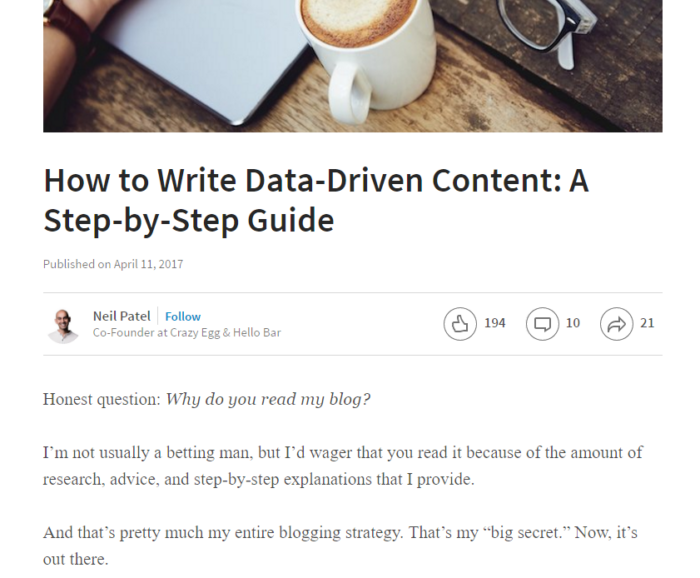
Guess what? You should be doing the same if you want to be seen as an influencer crafting must-read content.
While some have concerns about duplicate content penalties by republishing via LinkedIn, you probably don’t have much to worry about according to Search Engine Journal. Likewise, you can always switch up your titles, keywords, and structure if you’re paranoid about penalties.
For example, I personally take the approach of only giving my readers a taste of my blog via LinkedIn, ultimately leading readers back to my site. It’s a win-win situation as this strategy drives more traffic to my blog and creates more opportunities to grab leads via my on-site CTAs.

Pretty cool, huh?
Keep in mind that Facebook, Twitter, and LinkedIn are just a few options for promotion.
These three platforms don’t even scratch the surface of what you could potentially do with a single piece of content via social media.
However, these overlooked tactics alone are enough to reach thousands of new leads, meanwhile driving a steady stream of traffic back to your blog on a consistent basis.
And you know what’s crazy? It doesn’t take that much time or effort.
For these three particular channels, you could spend anywhere between thirty minutes to an hour on formatting and editing.
Totally worth it.
Taking the time out for this sort of social promotion is a no-brainer if you’re looking for a positive content marketing ROI.
But if you truly want to squeeze the most out of your content, why not take your promotional strategy a few steps further?
Repurposing Your Content
Much like social media promotion, repurposing your content just plain works when you choose the right channels.
Although repurposing requires a bit more legwork than simply publishing your work to social sites, presenting your content in multiple formats is absolutely crucial to expanding your reach and scoring new leads.
This is especially true in an era where text-based content simply isn’t enough anymore.
When you consider some of the staggering statistics concerning the rise of visual content, it’s crystal clear that we need to go beyond the written word when possible. For example:
- Tweets and Facebook posts including imagery receive twice as much as engagement than those without
- Infographics are liked and shared three times more than other social media content
- Three-quarters of marketers note that investing in video marketing has a direct impact on their business
For starters, you should strive to supplement your articles and social posts with images to encourage more shares. Coming up with infographics is a solid option if you’re writing content that deals with data (here’s a stock example below).

Beyond that, you can use imagery to preview your content and make it pop in your followers’ social feeds.

Platforms such as Canva enable you to quickly create text-based images, ideal when it comes to beefing up your social posts.

But what about repurposing your content into video?
YouTube is exploding right now with its massive base of over 1 billion users. Meanwhile, 92% of mobile users share videos with each other. In short, there’s viral potential in video marketing.
Also relevant for bloggers: We live in a world, for better or worse, where our audience would more likely watch a video than dig through a blog post, especially when covering a complex or boring topic.
Turning your blog posts into videos not only gives your content a new channel of exposure but also allows you to tap into a potential SEO gold mine as you double-dip your keywords.
Shooting video is probably easier than you think. If you have a blog post, you already essentially have a script in your hand.
Meanwhile, the new wave of informal, “talk to the camera” style of vlogs are all the rage right now. Check out this example from Jorden Makelle of WritingRevolt who regularly repurposes her buzzworthy blog posts into video content.
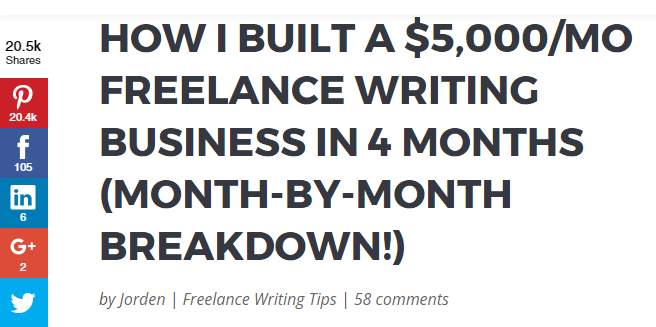
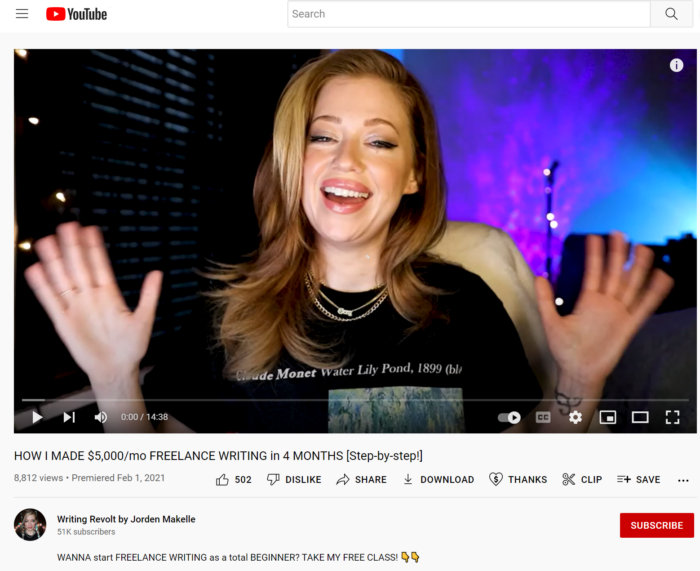
If you have a smartphone and a camera, you have everything you need to tap into the power of video marketing. Furthermore, you could easily take your blog content and use it as a Facebook Live or webinar presentation to get even more juice from the same piece.

Camera shy?
Not a problem.
If you really want to think outside the box, you can even go beyond visual content.
Podcasts have been on the rise over the years and also represent a way to turn your blog content into a conversation with your audience. For example, I co-host the Marketing School podcast which uses my blog content as the basis for a number of episodes.

But wait, there’s more.
I take my promotion another step further by using my podcast content as inspiration for my email marketing campaigns:

See how that works?
The more content you repurpose, the more you have to share. More leads, more traffic, plain and simple.
Sounds like a lot of legwork, doesn’t it?
But when you go back to the 80/20 rule, it really isn’t.
Although these strategies certainly take time, they exponentially increase your odds of reaching your leads versus organic traffic alone.
Frequently Asked Questions
What are some KPIs to measure my content marketing against?
If you’re looking how to measure content marketing that is impactful to your marketing plan, it doesn’t have to be complicated. Start with four key content metrics: consumption, sharing, lead generation, and sales. Consumption measures the heartbeat of your content from website traffic to social visibility. Sharing measures brand visibility, including backlinks, network referrals and number of downloads. Lead generation is driven from filled-out content forms, influence from CTAs, and demo requests. While the sales metrics measure overall sales, this also covers customer testimonials. These points are necessary for measuring content marketing ROI success to achieve business goals and not just content objectives.
How will I know my content marketing strategy is successful?
A successful content marketing strategy includes realizing audience personas, brand positioning, owned media value proposition, business goals, and action plan component. You can anticipate problems and budget resources wisely with long-term planning. Create and implement a content strategy that is in line with your marketing and commercial objectives by outlining these components through stages. Your audience will speak through the data showing high KPIs, engagement, and ROI from marketing efforts.
How do I build a profitable content marketing strategy?
Developing a content strategy takes a clear understanding of your audience, pushing high-quality content, mastering SEO best practices, and setting and tracking performance-based goals—even ads. A variety of conversions and actions will reveal strengths and weaknesses your team can use to make pivots for positive content marketing ROI.
How can a great content strategy make you money?
How a great content strategy can make you money starts with a content-rich plan. Your content needs to be compelling with a strong hook, and easy to skim, but full of key takeaways.
Visuals are the best way to target your audience and promote your share-worthy content. As for analyzing data, you will see how your conversion tactics – through paid ads or collaborating with others– will help leverage you plan for consistency or optimizing trends that fit your goals. All of these tactics will help you generate leads, the flow of your sales funnel, and build brand awareness.
Conclusion
Given the amount of time it takes to produce on-site content, a surefire way to ensure a positive content marketing ROI is through republishing and repurposing each and every piece you put out there.
If this seems daunting at first, don’t worry. The more time you spend promoting, the more you streamline your process. Promotion quickly becomes second nature.
Smart promotion creates a snowball effect as you quickly figure out which pieces of content perform the best and how you can use that information to influence your strategy moving forward.
Your content isn’t finished when you hit “publish.”
If you aren’t taking the steps to ensure that your pieces are being discovered and rediscovered time and time again, it’s time to rethink your approach.
Which of these promotional strategies do you think could potentially pay off the most for your business?
Are You Using Google Ads? Try Our FREE Ads Grader!
Stop wasting money and unlock the hidden potential of your advertising.
- Discover the power of intentional advertising.
- Reach your ideal target audience.
- Maximize ad spend efficiency.