





Do you say “hero,” “grinder,” “hoagie,” “sub,” or “sandwich”?
What about “shopping cart,” “buggy,” or “trolley”?
The precise terms you use probably depend on where you are in the world. However, they’re all related words that more or less mean the same thing.
I ask these questions not to start heated arguments over the “right” way to say something. It’s to point out your ability to understand how similar words relate to one another.
There’s an entire field of linguistics concerned with logic and meaning called semantics. It’s also a big part of SEO.
Ever since the 2013 Hummingbird algorithm update, Google has thought more like you. It understands how words and topics relate to specific search queries and delivers results accordingly.
The practice of optimizing for semantic search is what we call semantic SEO. In this blog post, I’ll explain what it is, why it matters, and how to execute a successful semantic SEO strategy. Hint: It’s all about using semantic keywords, sometimes previously called latent semantic indexing (LSI) keywords.
Let’s dive in.
Key Takeaways
- Semantic SEO focuses on optimizing content for meaning and context, improving how search engines understand and rank your pages.
- Semantic search prioritizes user intent, helping search engines deliver more relevant results by analyzing relationships between words and queries.
- Using semantic keywords broadens the scope of your content, making it more likely to rank for a variety of related searches.
- Incorporating schema markup enhances your content’s visibility by providing search engines with structured data, leading to richer search results.
- Creating comprehensive content that is relevant, well-structured, and free of unnecessary fluff delivers a better user experience (UX) and improved SEO performance.
Table of Contents
- Key Takeaways
- What Is Semantic SEO?
- Why is Semantic SEO Important?
- How to Find Semantic Keywords
- 6 Best Practices You Need to Know for Semantic SEO
- FAQs
- Conclusion
What Is Semantic SEO?
Semantic search engine optimization (SEO) is the practice of optimizing your website for semantic search.
Semantic search is “a type of search that understands the user’s intent and the relationship between concepts.”
You might be wondering, “But isn’t search intent important for SEO in general?”
The answer is yes. However, Google’s semantic search algorithm uses artificial intelligence and natural language processing (NLP) to analyze a search query and look for patterns in the data to deliver the most relevant results.
In other words, it’s the combination of intent and topical relevance that helps Google paint an accurate picture of what your content is about.
Imagine, for instance, that you say “grinder” and visit an area with “sub” shops. If you search “grinder shop near me,” the search engine results pages (SERPs) might show results like “sub shops” or “sandwich shops.”
Long ago, SEOs might have created a page for every exact-match keyword. Now, thanks to semantic search, you can create an SEO strategy around providing helpful, high-quality content, without need a page for every single keyword.
Here’s an example of keywords related to another search term, “semantic SEO.”


Why is Semantic SEO Important?
Search engines have gotten smarter through AI and machine learning.
For Google, introducing the Hummingbird algorithm was a huge leap forward. Hummingbird combined new and old technology to deliver more intelligent results and emphasize quality content over keyword quantity.
How does this play into semantic SEO? As I shared in my earlier example, Hummingbird looks beyond just SEO keywords to understand the full meaning of a query.
Conducting keyword research with this in mind and, in turn, crafting a content strategy that considers the semantic search environment will help you avoid putting out spammy, keyword-stuffed, low-quality content. Instead, you’ll produce pieces that are helpful, relevant, and worthy of securing a top spot in the SERP.
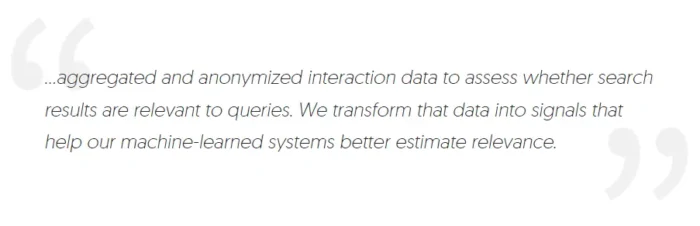
While keywords are still of the utmost importance, Google also uses “aggregated and anonymized interaction data to assess whether search results are relevant to queries. [Google transforms] that data into signals that help our machine-learned systems better estimate relevance.”
So, focus on finding relevant semantic keywords—i.e., terms that are semantically related to your subject.
Each semantically related keyword or group of words you use is relevant to the main keyword you’re targeting. But they’re not always synonyms—semantics search for ideas commonly found in conjunction with your primary keywords.
Let’s say your main keyword is “coffee brewing.” Semantically related keywords might include:
- Espresso machines
- Coffee grinders
- Pour-over methods
- Water temperature
- Roast levels
- Caffeine content
- Coffee beans
- Barista techniques
These terms aren’t synonyms for “coffee brewing,” but they’re closely related concepts often discussed in the same context.
Including semantic keywords in your content helps Google understand the site’s topic by giving it context. This also makes it easier for Google to index your content and may give your site better visibility.
How to Find Semantic Keywords
Finding relevant semantic keywords, otherwise known as semantically related keywords (or LSI keywords), is crucial for optimizing your content and ensuring it ranks. Here are some of the most effective methods to find LSI keywords:
- Bold Words in SERP Results: Identify related terms highlighted in bold when searching on Google.
- Google Autocomplete: Use the list of related words suggested by Google as you type.
- Topic Modeling: Focus your content using related words and phrases to align with search intent.
- Related Searches in Google: Scroll to the bottom of the search page to find alternative terms to use.
- People Also Ask: Explore questions related to your keyword and incorporate them into your content.
- Google Trends: Analyze popular searches and related topics for potential keywords. These methods help you uncover keyword variations and long-tail phrases that are crucial for semantic SEO.


Tools to Find Semantic Keywords
I recommend using my free keyword research tool, Ubersuggest, to find semantic keywords.
Here’s how it works.
Just enter your search term and click “Search.” Ubersuggest will generate all this (and more):
- Keyword Overview
- Search Volume
- Keyword Ideas
- Content Ideas
Say, for instance, I wanted to find keywords related to the search term “yoga.” Search “yoga,” click “Keyword Ideas,” and here’s what you’ll get.

Because “yoga” is a short-tail keyword, the related keywords that pop up have very different intent. For instance, the person looking up “yoga poses” is probably hoping to learn more about different yoga poses, while the person searching for a “yoga mat” is probably in the market to buy a yoga mat.
The results might be different for longer-tail keywords, but the most important point is that you can use these LSI keywords to inform your content strategy in a way that helps you rank and provides searchers with information that’s relevant and helpful to them.
6 Best Practices You Need to Know for Semantic SEO
To maximize the impact of your semantic SEO efforts, it’s important to take the following actions:
- Update Old Content: Refresh existing content with new semantic keywords to align with current search intent, boosting your rankings. Be careful not to remove ranking keywords in the process.
- Match Search Intent: Create content that aligns with what users are searching for by leveraging tools like Ubersuggest and Google Analytics.
- Use Keyword Variations: Incorporate keyword variations to increase your chances of ranking for multiple terms. Do not try to stuff variations in. Instead, incorporate them naturally.
- Implement Schema Markup: Add structured data to enhance your content’s relevance and visibility in SERPs.
- Be Comprehensive, Not Fluffy: Ensure longer content is valuable and on topic, avoiding unnecessary details.
- Focus on Topics: Prioritize broader topics over specific keywords to better match user intent and cover the subject thoroughly.
Let’s expand on each of these action items.
1. Update Old Content
Updating old content is a powerful SEO strategy. Instead of focusing solely on creating new content, review old content for opportunities to integrate semantic keywords and related topics into it.
This process, known as content optimization, breathes new life into your older material. It results in more well-rounded content that better aligns with current search trends and user intent. It also might just save you time and effort creating new content.
Say you wrote a blog post about “sandwich recipes,” for instance. You could enhance it by adding related semantic keywords like “lunch ideas” or “healthy snacks” or other sandwich-related phrases like “chicken sandwich recipes” or “vegetarian sandwich recipes.” These related terms are contextually linked to “sandwich” and help search engines understand the broader topic of your content.
As an added bonus, updating content not only boosts its relevance but also increases the chances of it being discovered by a wider audience. This can be especially helpful when writing blogs, which are meant to be top of funnel.
2. Ensure Your Content Is Relevant for Search Intent
Generally speaking, there are four types of search intent:
- Informational: Usually question-based (e.g., “What are the most common yoga poses?”)
- Commercial: Often include the words “best,” “review,” or “compare” (e.g., “compare yoga mats”)
- Navigational: Often centers around a brand and/or specific webpage (e.g., “lululemon yoga mats”)
- Transactional: Usually is product or service specific or may include intent-to-buy words such as “purchase” or “download”
Remember the yoga example I mentioned when discussing Ubersuggest as a tool for finding relevant semantic keywords?

The person looking up “yoga poses” wants to learn more about different yoga poses, which is an informational search. The person looking for a “yoga mat” is probably motivated to buy a new yoga mat and may be researching different yoga mats, which is commercial intent.

Analyzing Google’s Search Generative Experience (SGE) results for different queries and their search intent can be another helpful strategy.
At its core, search intent simply refers to the purpose behind a user’s search query—what they’re really looking to find or learn.
As simple as this may sound, it’s essential to consider when doing keyword research and implementing a content strategy. You want the keywords you’re targeting to meet searchers where they are. Only if they find the information they’re looking for will they stay on-page and potentially convert.
Plus, when your content is helpful as a whole, Google sees your site as a reliable resource for your audience. This also helps you build domain authority.
3. Take Advantage of Keyword Variations
Incorporating relevant keyword variations is a vital part of approaching semantic SEO the right way.
It’s still important to pick a main keyword with the right search intent and a good balance of difficulty and search volume. But, rather than focusing only on that keyword, you should aim to incorporate variations and long-tail phrases that reflect different aspects of your audience’s intent.
Not only will this help users, but it will also help Google more accurately crawl and index your content.
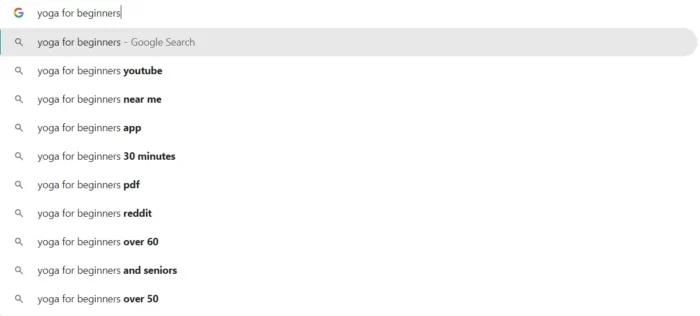
For example, if your primary keyword is “yoga for beginners,” consider using variations like “beginner yoga poses,” “yoga for flexibility,” or “easy yoga routines.” These variations cater to different user needs and search intents, enabling you to rank for a broader range of related searches.
Tools like Ubersuggest and Google autocomplete are excellent for discovering these variations.
4. Build in Schema Markup
Schema markup provides structured data that helps search engines interpret your content, boosting its visibility and potentially resulting in rich search results like featured snippets.
You can use schema for various elements, like blog posts, FAQ pages or sections, and how-to guides.
For instance, adding how-to schema to a sandwich recipe page can showcase the process of how to make the recipe and provide additional context to Google.
Tools like Google’s Structured Data Markup Helper or WordPress plugins like Yoast SEO can help you implement schema easily with no coding knowledge required. What’s more, integrating schema improves your content’s discoverability, relevance, and overall SEO effectiveness.

5. Be Comprehensive, But Not Fluffy
For effective semantic SEO, make your content comprehensive. Cover all aspects of a topic in depth. This signals expertise to search engines and gives readers more relevant information to choose from.
In doing so, however, be careful to cut out any unnecessary “filler” or “fluff.”
In other words, focus on providing detailed, insightful information that genuinely benefits your readers. While longer content offers more opportunities for semantic keywords, each word and section should have a purpose.
Prioritize quality over quantity to improve user engagement and achieve higher conversion rates. Outlining your content and deciding what the main point of each section should be before writing often helps with this.
6. Craft Content Around Topics as Well as Keywords
Choosing a main keyword and halo keywords remains an important part of not just good keyword research, but good content strategy. That said, don’t get so stuck on individual keywords that you forget about the overall significance of the broader topic you’re writing about.
Therefore, targeting broader topics and focusing on keywords that center around that topic can be an effective way of optimizing for semantic SEO. By following this strategy, you can address a wider array of related search queries and attract more traffic.
This strategy aligns with how search engines now emphasize understanding the context and intent behind searches as part of semantic search.
When planning your content, start by identifying the central theme you want to explore. Then, pinpoint narrow subtopics or search queries related to that central theme.
Creating topic maps that visually outline the main topic, related subtopics, and relevant keywords can be an extremely helpful way to do just that.
Ubersuggest’s keyword visualization tool can be particularly helpful here, as it maps out a list of related keywords and queries with different search intent for you.

FAQs
What is semantic search?
Semantic search is a search engine’s method of understanding the intent and context behind a query to deliver more relevant results. It goes beyond matching keywords by considering relationships between words and user behavior.
What is semantic SEO?
Semantic SEO involves optimizing content to align with user intent and context rather than just specific keywords. This approach helps search engines better understand the overall meaning of your content, improving your chances of ranking for a wider range of queries.
What is a semantic keyword (LSI keyword)?
A semantic keyword, aka LSI keyword, is a term that’s contextually related to your main keyword, helping search engines grasp the broader topic of your content. These keywords enhance the relevance and depth of your content.
How do I optimize for semantic searches?
To optimize for semantic searches, create content that addresses the full scope of user intent, use related keywords naturally, and incorporate clear structure and schema markup. This helps search engines understand and rank your content more effectively.
Conclusion
Semantic SEO is essential in today’s search landscape, where understanding user intent and context is key to ranking higher, attracting more traffic, creating helpful content, and establishing domain authority.
By focusing on semantic keywords, optimizing for semantic search, integrating schema markup, and producing helpful, high-quality content, you can create content that resonates with both search engines and users.
Remember to regularly update your content to align with current search trends to keep it relevant and valuable. This approach not only boosts your SEO performance but also positions your site as a reliable and authoritative resource in your niche.
If that sounds like too much time and effort, rest assured, there are plenty of benefits to outsourcing your digital marketing.
Unlock Thousands of Keywords with Ubersuggest
Ready to Outrank Your Competitors?
- Find long-tail keywords with High ROI
- Find 1000s of keywords instantly
- Turn searches into visits and conversions
Free keyword research tool