 Sign In


 Ubersuggest
  AnswerThePublic
 Can Readers Detect AI Written Content

Info
-
Source: NP Digital
-
Date: December 2024
-
Category: AI-Generated Content
-
Study Methodology: NP Digital analysis of 1,000 articles with feedback from 83 respondents.
As AI content becomes more common, detection is a growing concern. This chart tests whether readers can actually tell if an article was written by AI or a human. The results challenge many assumptions about content perception. For most readers, authorship is less obvious than marketers think.
Essential Statistics
- Readers misidentified AI-written content at high rates.
- Human-written articles were frequently mistaken for AI content.
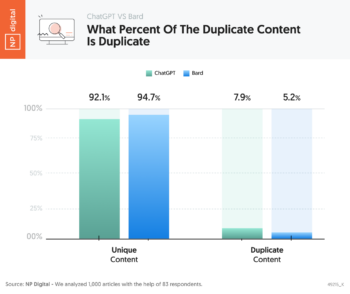
- Accuracy rates were similar across ChatGPT and Bard outputs.
- No clear detection advantage existed for human writing.
- Content quality mattered more than authorship.
Key Takeaways
- Most readers cannot reliably detect AI-written content.
- Human writing does not guarantee perceived authenticity.
- Quality overrides authorship in reader judgment.
- AI content is approaching parity in perceived credibility.
- Disclosure fears may be overstated for most audiences.
Actionable Insights
- Focus on quality over disclosure anxiety. Readers judge usefulness and clarity, not whether AI assisted the writing process.
- Use AI confidently for informational content. Detection risk is low when content is well structured and valuable.
- Prioritize editing over authorship. Strong human editing improves outcomes more than avoiding AI entirely.
- Test audience sensitivity by content type. Some formats may require more human nuance than others.
Build trust through consistency, not labels. Reliable value matters more than who or what wrote the article. – Neil Patel