



Feeling like your small business is invisible online? Pay-per-click (PPC) advertising can help you cut through the noise and reach your ideal customers fast—no need to wait months for organic traffic to grow. For small businesses, PPC allows you to compete with bigger brands, even on a tight budget, by focusing your efforts on the people most likely to convert.
In this guide, I’ll break down the essentials of PPC specifically for small businesses. You’ll learn how to build campaigns tailored to your goals, attract high-intent customers in your local or niche markets, and maximize every dollar you spend. Even if you don’t have years of experience as a PPC manager, I’ll show you how to create ads that deliver real results—because for small businesses, every click counts.
Key Takeaways
- PPC helps small businesses compete with bigger players. You only pay for clicks, so every dollar spent works toward reaching potential customers ready to take action.
- Targeting options like location and demographics are critical for small businesses. Focus your efforts on local or niche audiences to maximize ROI and avoid wasting money on irrelevant clicks.
- Start small and scale strategically. Testing different ad formats and keywords with a modest budget helps you find what works before committing more resources.
- Mobile optimization is a must for small businesses. Most local searches happen on smartphones, so having mobile-friendly ads and landing pages makes it easy for users to connect with your business.
- Regular tracking and adjustments make all the difference. Conversion tracking, A/B testing, and performance reviews show you what’s working so you can keep improving your campaigns.
Table of Contents
- Key Takeaways
- What Is PPC?
- How to Create a PPC Campaign for Small Businesses
- 9 Small Business PPC Tips
- Common PPC Mistakes to Avoid
- FAQs
- Conclusion
What Is PPC?
PPC is a cost-effective digital marketing strategy that allows small businesses to display ads on platforms like Google, Bing, and Facebook. Unlike traditional advertising, where you pay upfront, PPC charges only when someone clicks on your ad. This makes it an effective method to attract traffic and drive conversions, especially for small businesses looking to maximize their marketing budget.

When a customer searches for a product or service, PPC ads often appear at the top of the search engine results page (SERP). These ads are strategically designed to target specific audiences based on factors like location, demographics, or interests.
For instance, a local bakery can use PPC to target users searching for ‘fresh pastries near me,’ ensuring their ads show up at the top of search results.
Here are a few key PPC terms every small business owner should know:
- CPC (Cost Per Click): The amount you pay each time someone clicks on your ad.
- CPM (Cost Per Thousand Impressions): The cost for every 1,000 times your ad is displayed.
- CTR (Click-Through Rate): The percentage of people who click on your ad after seeing it.
- Quality Score: A score assigned by platforms like Google that measures the relevance and quality of your ad.
- Landing Page: Users are directed to the web page after clicking your ad, which should be optimized for conversions.
What Are the Benefits of PPC for Small Businesses?
Small businesses have unique challenges—limited budgets, local competition, and the need for fast results. PPC advertising is designed to address those challenges and deliver real value where it matters most. Here’s how:
- Pay Only for Interested Leads: When your budget is tight, every click matters. With PPC, you’re only paying for people who show actual interest by clicking on your ad. That means no wasted dollars on passive viewers, and every cent goes toward reaching someone who’s more likely to convert.
- Full Control Over Your Budget: PPC gives you complete control over how much you spend. You set your daily or monthly cap, and your ads pause automatically when you hit it. This flexibility allows small businesses to test campaigns without financial risk and scale as they see what works.
- Pinpoint Targeting Options: Small businesses often depend on reaching specific audiences—whether it’s local shoppers or niche customer groups. PPC makes that possible with advanced targeting options. You can focus your ads based on location, demographics, interests, and even behaviors. For example, a bakery can target users searching for “custom cakes near me,” ensuring the right audience sees their ad.
- Immediate Impact: Time is critical when you’re running a small business. Waiting months for organic traffic to build isn’t always an option. With PPC, your ads go live quickly, and you start seeing traffic right away. Whether you’re launching a new product, running a seasonal promotion, or filling last-minute appointments, PPC helps you act fast and get results when you need them.
- Data-Driven Optimization: Data is one of the biggest advantages of PPC for small businesses. Platforms like Google Ads provide clear metrics on clicks, conversions, and ROI. This isn’t just about tracking—it’s about making informed decisions. You can see what’s working, adjust your campaigns, and continually improve results without wasting time or money on guesswork.
How to Create a PPC Campaign for Small Businesses
Creating a PPC campaign might feel overwhelming at first, but it’s all about taking it step by step. Success with PPC starts by zeroing in on your audience, studying your competition, choosing the right keywords, and building landing pages designed to convert.
Understand Your Audience
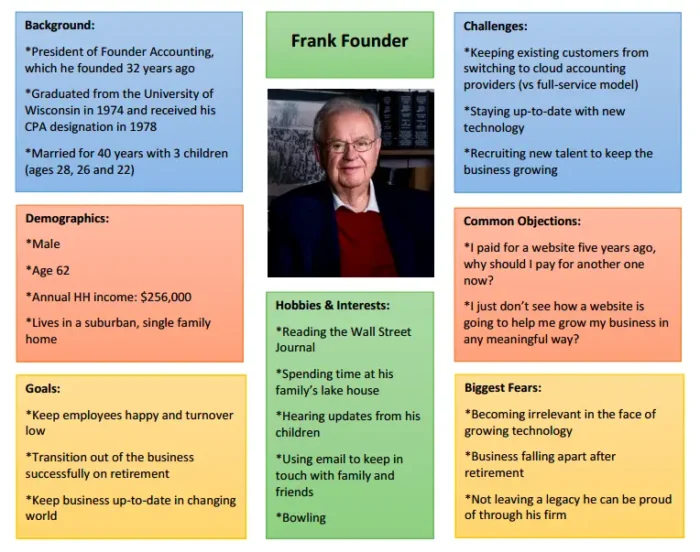
If you’re running a small business, understanding your audience is everything. Your budget is tighter, and your ads need to deliver results—not guesses. To make your PPC campaigns work, you have to build detailed audience personas that focus on the people most likely to buy from you.
Start with the essentials:
- Demographics: What’s their age, gender, and income level?
- Location: Are they local to your business, or are you serving a broader area?
- Behaviors: What are their buying habits, search patterns, and daily routines?
But don’t stop there. For small businesses, hyper-local details make a huge difference. For instance, if you own a yoga studio:
- Age: 25–40 years old
- Location: Within a 10-mile radius of your studio
- Income Level: Middle to upper-middle class
- Interests: Health, mindfulness, and community
- Pain Points: Finding time to exercise and looking for stress relief
With this level of clarity, your ads can speak directly to your audience. Instead of a generic headline like “Join Our Yoga Studio,” try something that addresses their needs: “Relax and Recharge—Yoga Classes Near You.”
Here’s what a customer persona looks like in action:
Source: Neil Patel
Small businesses also have a unique advantage—you’re closer to your customers. Use that to your benefit. Talk to them, review feedback, and dig into your existing data. Tools like Google Analytics can help you identify trends, but so can conversations at the checkout counter or surveys sent to loyal customers.
When you truly know your audience, your PPC campaigns can reach the right people at the right time—and drive results you can count on.
Research Your Competitors
Standing out in the crowded PPC space starts with knowing what your competitors are doing—and where they’re falling short. Competitor research helps you identify opportunities to refine your campaigns, capitalize on gaps, and outpace others in your industry.
Start by analyzing their keywords, ad copy, and landing pages. Tools like Ubersuggest simplify this process by showing you the keywords they’re ranking for, their ad performance, and even their backlinks.

Source: Neil Patel
Here’s how to dive deeper:
- Audit Their Campaigns: Look for weaknesses in their PPC strategy. Are their ads missing call-to-action extensions or details like pricing? You can use ad extensions—like phone numbers or special offers—to make your ads more compelling and visible.
- Analyze Top-Performing Pages: Identify the pages driving the most traffic to their site. If you don’t have a similar page, create one that provides even more value. If you do, optimize it with stronger keywords or more persuasive ad copy.
- Explore Keywords: Check the keywords they’re targeting. Are they ignoring long-tail keywords or niche terms? These overlooked opportunities could give you a competitive edge without the high competition for broader terms.
- Track Their Backlinks: Use Ubersuggest’s backlink tools to see which sites are linking to your competitors. These could be great targets for your outreach efforts—especially if you can provide even better content.
For example, if you’re a local pet grooming service and your competitor is ranking for “affordable pet grooming in [city],” you could target similar keywords with a more niche focus like “mobile pet grooming in [city].”
Competitor research isn’t about imitation—it’s about finding opportunities they’ve missed and executing them better. By keeping a pulse on your competition, you can build a PPC strategy that outperforms even the most established players in your market.
Do Keyword Research
Keywords are the foundation of any successful PPC campaign, but for small businesses, choosing the right ones is critical. You’re competing with bigger brands that often dominate the most generic terms, so your goal is to find keywords that fit your niche, attract your ideal customers, and stay within your budget.
Start with a balance of broad and long-tail keywords:
- Broad Keywords: These cast a wide net, like “cleaning services.” While they can attract a lot of traffic, they’re often more expensive and less targeted.
- Long-Tail Keywords: These are more specific, like “affordable deep cleaning services in Chicago.” Long-tail keywords help you target high-intent customers who are further along in their decision-making process. They’re often cheaper and more effective for small businesses.
Let’s say you run a bakery specializing in custom cakes. Instead of bidding on “cake,” which is broad and competitive, go for a long-tail keyword like “custom wedding cakes in [city].” This narrows your audience to people actively searching for your exact service.
As Bethany Sloane, Director of Paid Search at NP Digital, explains, “Small businesses can boost paid search ROI by focusing on local targeting, optimizing long-tail keywords, and refining ad relevance. Using specific, local keywords lowers competition and attracts high-intent users. Enhancing ads with call or location extensions can make them more useful and visible. Keep an eye on your data and make small, consistent optimizations—these can lead to better results without breaking the bank.”
By focusing on local relevance and fine-tuning your approach, you can attract the right audience, improve ad performance, and make the most of your budget.
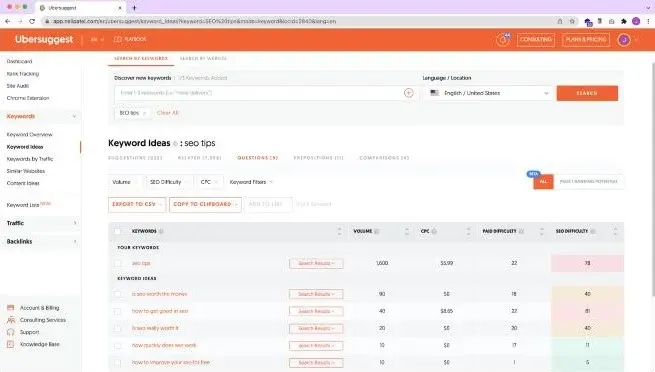
Use tools like Google Keyword Planner or Ubersuggest to find terms that align with your services and audience. Look for keywords with:
- High search intent (e.g., “book dog grooming appointment” vs. “dog grooming tips”)
- Moderate competition to avoid bidding wars
- Relevance to your unique offerings
Source: Neil Patel
For small businesses, negative keywords are a must. They prevent your ads from showing up in irrelevant searches, saving your budget for clicks that matter. For example, if you sell premium pet supplies, add “cheap” or “free” as negative keywords to filter out users looking for bargains that don’t match your pricing.
By focusing on strategic, targeted keywords, you can level the playing field against larger competitors and drive traffic that actually converts. Remember, it’s not about attracting everyone—it’s about reaching the right people who are ready to take action.
Create a Landing Page
Your landing page is where the magic happens. This is where potential customers decide whether to take action, so it needs to be spot-on.
Here’s what a high-performing landing page includes:
- Clear, Relevant Copy: Match the tone and messaging of your ad to build trust.
- Strong Call-to-Action (CTA): Make it obvious what you want visitors to do—whether it’s “Sign Up Today” or “Get a Free Quote.”
- Mobile Optimization: Test your landing pages on mobile and ensure forms are simple and quick to complete.
- Visual Appeal: Clean, professional design keeps visitors focused on your offer.
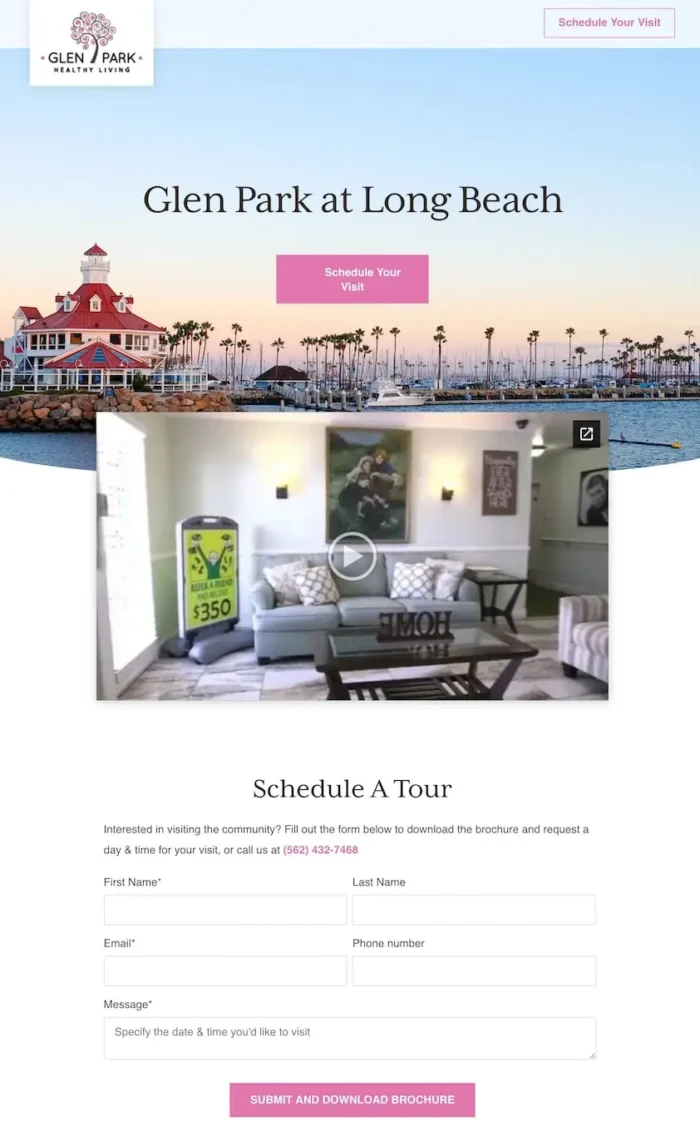
Let’s take the example of Glen Park Senior Living.
Source: Glen Park Senior Living
Their landing page is highly effective because it’s tailored for clarity and usability:
- Bullet Points for Services: The key services are listed in easy-to-scan bullet points, so visitors can quickly decide if Glen Park meets their needs without digging through paragraphs of text.
- Accreditations for Credibility: They highlight accreditations prominently, which builds trust and reassures potential customers that they’re dealing with a reputable business.
- Visuals for Context: Floor plan images provide a clear visual understanding of the facility, helping users picture the experience and connect emotionally with the offering.
If you’re a small business, think about what your customers care about most—convenience, trust, and visual appeal. Make it easy for them to say yes with a landing page that speaks directly to their needs and answers their questions up front. Every detail should guide visitors toward taking the next step.
9 Small Business PPC Tips
Running a successful PPC campaign doesn’t have to be complicated. With a few strategic adjustments and ongoing optimization, you can create ads that convert and deliver a great ROI. Here are nine actionable tips to help you make the most of your small business PPC efforts.
1. Start Small With Your Budget
When starting out, it’s best to ease into PPC campaigns with a smaller budget. This lets you test different ad formats, keywords, and audiences without risking a significant amount of money upfront.
For example, try setting a daily budget of $20–$50 and use that data to figure out what works. Pay attention to metrics like click-through rate (CTR) and conversions, then increase your budget strategically. This approach keeps your spending manageable while helping you learn what resonates with your audience.
2. Use Keyword Match Types
Choosing the right keyword match type can make or break your PPC campaign. Match types determine how closely a user’s search query needs to align with your selected keywords. Here’s a quick breakdown:
- Broad Match: Shows your ad for searches related to your keyword but not necessarily exact matches.
- Phrase Match: Displays your ad when the search query includes your keyword in the exact order.
- Exact Match: Limits your ad to searches that match your keyword exactly.
For instance, if you run a bakery, a broad match for “cupcakes” might show your ad for “birthday cakes.” Meanwhile, an exact match for “vegan cupcakes” will target users with very specific intent. Using a mix of match types can help you balance reach and relevance.
3. Write Clear, Compelling Copy
Your ad copy needs to grab attention and drive action—fast. For small businesses, this means focusing on clarity and directness. Skip vague or overly clever language and speak to the specific needs of your customers.
For example, let’s say you’re running ads for a mobile pet grooming service:
Headline: “Convenient Mobile Grooming for Happy Pets”
Description: “We bring professional grooming right to your doorstep. Book your appointment today and keep your pets looking their best!”
Small businesses should also emphasize trust and community. Phrases like “Family-Owned Business Since 2015” or “Trusted by [Local Community/City Name]” add a personal touch and resonate with local audiences.
Here are a few tips tailored for small businesses:
- Speak to Pain Points: Address challenges your customers face and show how your service solves them. For instance, “No time to clean? Let us handle it—schedule your home cleaning today.”
- Incorporate Local Relevance: If your audience is geographically targeted, use location-based language like “Proudly Serving [City Name]” to build familiarity.
- Be Specific in Your Call-to-Action (CTA): Small businesses benefit from action-driven CTAs like “Call Us for a Free Quote” or “Get 15% Off Your First Service Today.”
Lastly, skip the cleverness—clarity wins every time. Include your unique value proposition (UVP) and make sure your copy aligns with the keywords you’re targeting in your content marketing efforts.
4. Include a Call to Action (CTA)
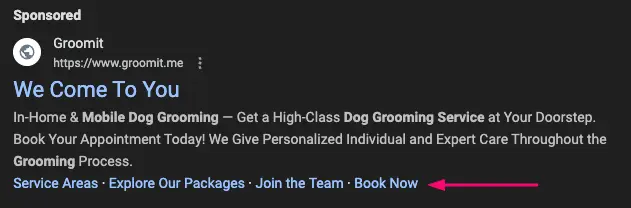
Your ad’s CTA is your final push to get users to take action. Make it specific and actionable, guiding your audience toward the next step. Examples of strong CTAs include:
- “Book Now”
- “Claim Your Free Consultation”
- “Get 20% Off Today”
Keep your CTA short and directly tied to your campaign goal. If your ad promotes a service, a CTA like “Call Us to Get Started” helps potential customers know exactly what to do.
5. Prioritize Mobile
More than 50% of internet traffic comes from mobile devices, making mobile optimization a non-negotiable for small businesses. This is especially important for local businesses, as most people search for nearby services on their smartphones while on the go.
Think about it—when someone searches for “coffee shop near me,” they’re likely looking for immediate solutions. If your landing page isn’t mobile-friendly, you’re missing out on those ready-to-buy customers.
Start by ensuring your landing pages load quickly, have a responsive design, and are easy to navigate on smaller screens. Include simple, clickable elements like call buttons or location maps that make it effortless for mobile users to contact or visit you.
Take a note from Litmus with the example below.
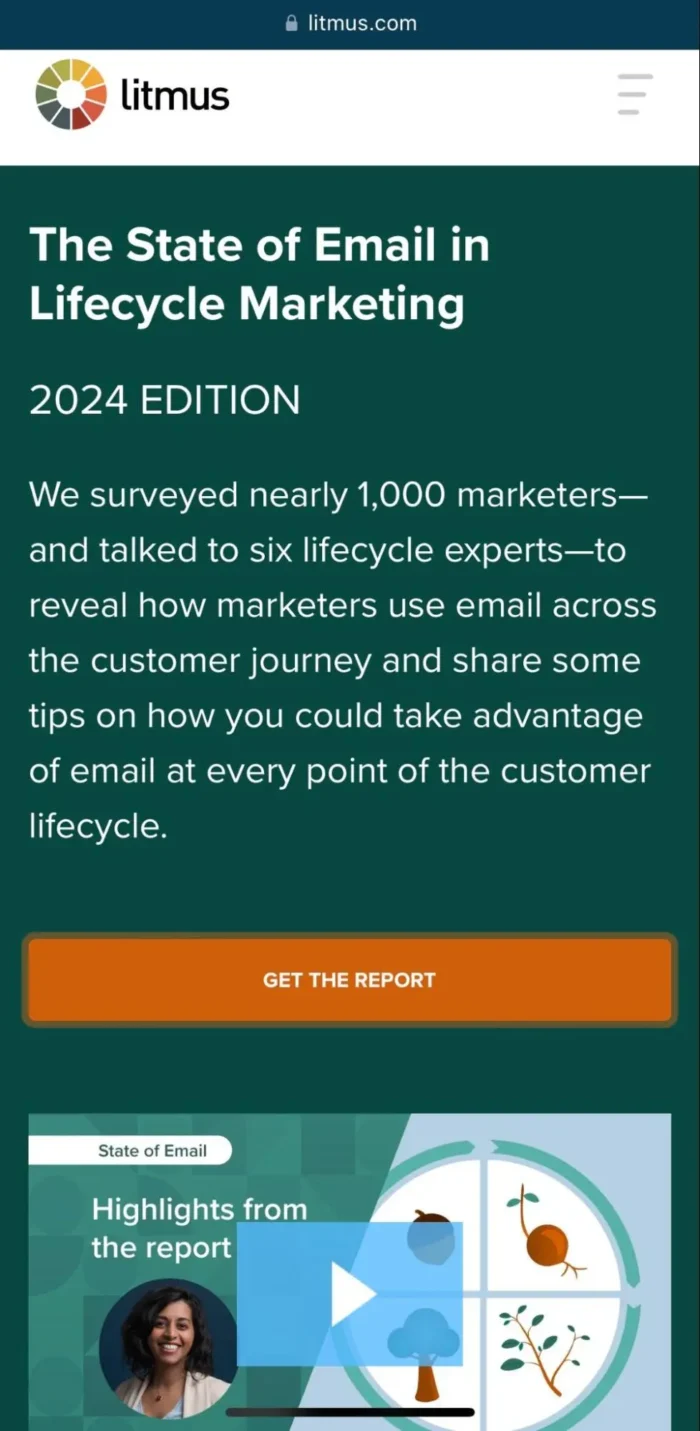
Their landing page for report downloads is optimized for mobile, with a clean layout and a pop-up form fill that requires no scrolling. It’s quick, easy, and built for action on the go.
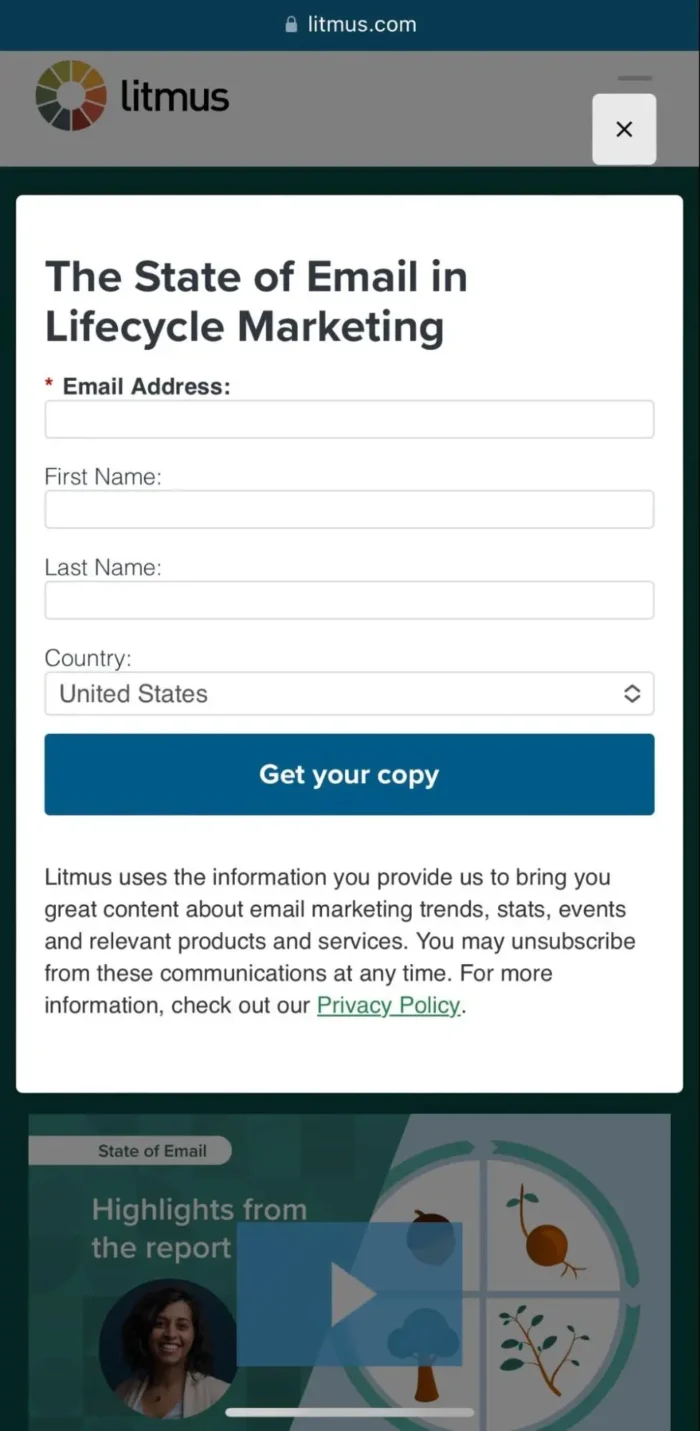
Take a note from Litmus and keep forms short and simple to reduce friction for users. Test your ads and landing pages on different devices to confirm they look great everywhere. No matter what channel you’re using, be sure you’re always creating mobile-friendly content.
6. Set Up Conversion Tracking
If you’re not tracking your conversions, you’re flying blind. Conversion tracking helps you understand which ads are driving clicks, sales, or other key actions. Use tools like Google Analytics to set up conversion goals that align with your PPC campaign objectives.
For instance, track actions like users downloading a free eBook or completing a purchase to understand which ads are most effective.
This data shows you what’s working and where you need to improve. With conversion tracking, you can calculate ROI and make smarter decisions to maximize your budget.
7. Consider A/B Testing Ads
Not sure which ad copy, headline, or CTA will perform better? A/B testing lets you find out by running two variations of your ad to see which one gets more clicks or conversions.
For example, you might test two headlines like:
- “Get 20% Off Your First Order!”
- “Order Now and Save Big Today!”
Wall Monkeys swapped out the headline and featured images in the example below and saw a 550% increase in conversion rates.

Source: Neil Patel
After collecting enough data, stick with the version that delivers better results. A/B testing isn’t a one-time task—it’s an ongoing process to help your campaigns improve over time.
8. Review Performance
Regularly reviewing your campaign’s performance is essential for long-term success. Keep an eye on metrics like:
- CTR (Click-Through Rate): Shows how well your ad grabs attention.
- CPC (Cost Per Click): Helps you manage spending efficiently.
- Conversions: Tracks actions taken after a click, like purchases or sign-ups.
Analyze this data to identify trends and adjust your strategy. If CTR is low, tweak your ad copy. If CPC is too high, refine your keywords or targeting. Consistent monitoring keeps your campaigns sharp and effective.
9. Use Retargeting
Most people won’t convert on their first visit—but that doesn’t mean they’re not interested. Retargeting keeps your business top of mind by showing ads to users who’ve already visited your site or interacted with your brand.
For example, if a customer views a product on your site but doesn’t buy, retargeting can display that product in their social media feed or search results.

This gentle nudge often encourages users to return and complete their purchase.
Common PPC Mistakes to Avoid
Even the best PPC strategies can stumble if you’re not careful. Avoid these common mistakes to help your campaigns drive results without wasting your budget:
- Overbidding on Keywords
Spending too much on competitive keywords can drain your budget fast. Focus on high-intent keywords with manageable costs, and don’t be afraid to test lower bids. - Skipping Negative Keywords
Not using negative keywords means your ads could appear in irrelevant searches, wasting clicks. For example, if you’re a luxury spa, adding “cheap” as a negative keyword keeps bargain hunters from clicking your ads. - Ignoring Mobile Optimization
Failing to optimize for mobile users can lose you half your audience. Ensure your landing pages are responsive and load quickly on mobile devices. - Poor Ad Copy
Vague or overly generic copy won’t grab attention. Be clear, concise, and include a strong call-to-action to direct users to take the next step. - Not Tracking Conversions
Without tracking, you can’t measure what’s working. Set up conversion tracking to monitor actions like sign-ups or purchases, so you know which ads are worth the investment.
FAQs
Does PPC work for small businesses?
Yes, PPC is an excellent strategy for small businesses. It allows you to compete with larger brands by targeting specific audiences with precision. With a flexible budget and real-time data, you can reach potential customers quickly and adjust your campaigns as needed for better ROI.
Is SEO or PPC better for small businesses?
It depends on your goals. SEO builds long-term organic visibility, while PPC delivers immediate results. Ideally, you should combine both strategies—SEO for sustained traffic and PPC for quick wins or time-sensitive promotions.
Conclusion
PPC is one of the best tools small businesses can use to compete online. It delivers fast results, helps you reach your ideal customers, and makes every dollar count—perfect for businesses with tighter budgets and local audiences. Focus on high-intent keywords, optimize for mobile, and track your results to keep improving. Need to scale faster? Strategies like growth marketing and PPC automation can help you save time and maximize ROI. With the right approach, PPC can be your go-to strategy for driving growth and staying ahead of the competition.
Are You Using Google Ads? Try Our FREE Ads Grader!
Stop wasting money and unlock the hidden potential of your advertising.
- Discover the power of intentional advertising.
- Reach your ideal target audience.
- Maximize ad spend efficiency.